Category: Corporate Visionaries
Navin Bishnoi, AVP & India Country Manager at Marvell Technology, believes the best leaders solve tomorrow's challenges by building strong systems and stronger teams.
Designing the Invisible How Navin Bishnoi Powers the Backbone of Global AI
IndiSight Editorial
Sep 15, 2025
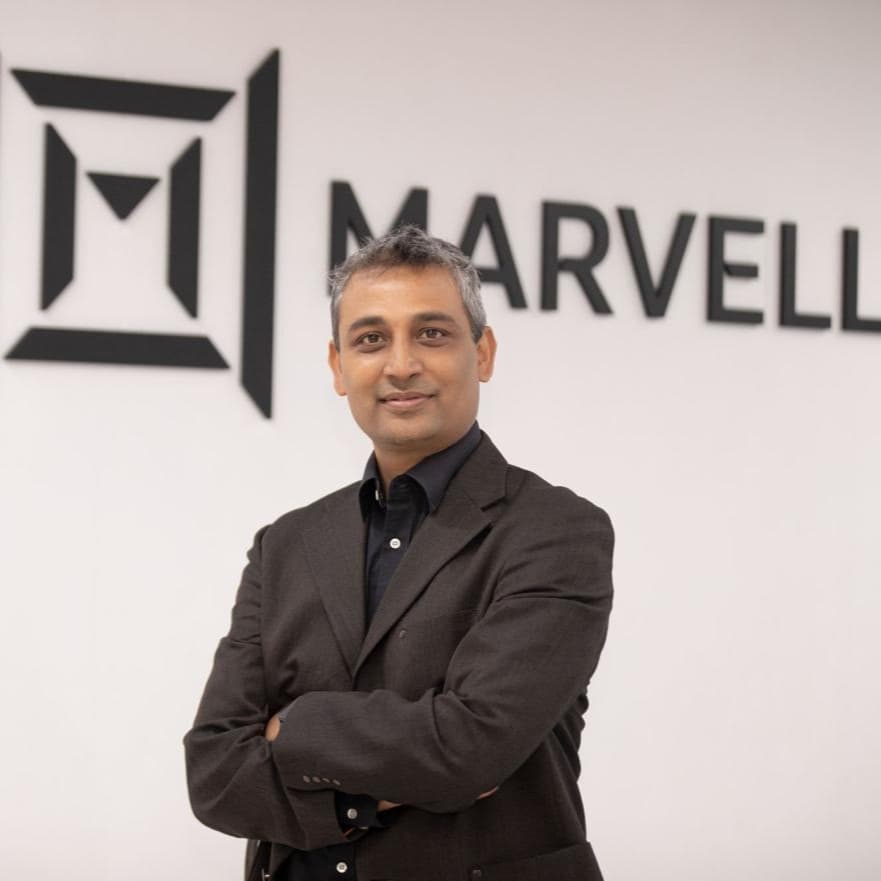
Navin Bishnoi
The most transformative leaders do not only respond to the future. They design it.
One of them is Navin Bishnoi, Country Head (India) and Associate Vice President of Data Center Engineering at Marvell Technology. With more than 25 years across the semiconductor value chain, from Electronic Design Automation to advanced compute and custom silicon, Navin leads one of India’s most influential engineering teams. His work shapes not just chips, but the invisible systems that carry the world’s most critical data.
Marvell Technology builds the behind-the-scenes chips that keep the world’s data moving. As a fabless designer of high-performance silicon, Marvell's custom solutions power AI data centers, 5G networks, cloud platforms, and next-generation vehicles. The company partners with hyperscalers such as AWS and NVIDIA to deliver fast, energy-efficient computing at scale. Valued at more than 62 billion US dollars and generating roughly 5.8 billion US dollars in annual revenue, Marvell quietly supplies the foundational silicon for today’s digital infrastructure.
At the heart of Marvell India’s approximately two-thousand strong engineering team is a simple, demanding philosophy: “You do not design for today’s requirements. You design for challenges you cannot even see yet.” That belief has shaped not only technology but also resilient systems, collaborative teams, and a leadership ethos that travels across borders and years.
Roots in Bhilai
Navin’s journey begins in Bhilai, Chhattisgarh, a city forged in steel and known for discipline and grit. The community around him was diverse and close-knit. Sharing food, festivals, and stories with neighbors from different parts of India taught him the value of inclusion and respect early in life.
He went on to study engineering at NIT Surathkal, where systems thinking took hold. In the early 1990s, India had no semiconductor roadmap, no fabs, and little policy support. The safer choice would have been software. He chose silicon instead.
“There was no blueprint. But I believed this was the future. I wanted to help build it, not wait for it.”
A mentor advised him to be a “big fish in a small pond,” to choose places where he could create outsized impact. That counsel shaped many of his career choices.
Bloom Where You Are Planted
Navin’s leadership values were forged during the most difficult chapter of his life. Months into his first role at Texas Instruments, his father was diagnosed with terminal cancer. Days belonged to hospitals, nights to the lab. He often reached the office in the evening and worked through to the early hours, determined to deliver.
What stayed with him was not only the hardship but the way Texas Instruments responded. Quiet flexibility. Internal loans when needed. Respect and trust without theatrics. A small note pinned to his cubicle on day one carried a line that later became his compass: “Bloom where you are planted.”
He stopped asking what the company owed him and started asking what he could contribute to the team, the institution, and eventually the country. That mindset became the backbone of his leadership.
Leadership as System Architecture
Navin treats leadership the way he treats engineering. It is modular, collaborative, and built to scale. “It is not about being the smartest in the room. It is about creating space where others can do their best work.”
His teams are organized to mirror the systems they build. Interfaces are clear, responsibilities are owned, and decisions are judged by three questions. Does it scale? Does it degrade gracefully? Will it hold under stress? He empowers freely but draws a hard line on accountability. “Leadership is not a popularity contest. It is about doing what is right, even when it is not convenient.”
Make Trust Measurable
In deep tech, a small lapse can derail an entire product cycle. Navin balances high trust with high discipline. “If someone says a task is done, the next step is not applause. It is validation. That is not doubt. That is discipline.”
At the same time, the environment is safe. Engineers are expected to raise flags early, admit mistakes, and suggest better options when they see them. Clear reviews and predictable processes make that possible. The result is a culture where people feel respected and the work meets a very high bar. Trust is not assumed; it is built, checked, and renewed across time zones and functions.
Clarity Under Pressure
What distinguishes Navin in high-stakes moments is calm. Not silence for its own sake, but clarity when things feel chaotic. “Stillness is not the absence of pressure. It is the ability to stay centered within it.”
When schedules tighten, he simplifies the problem, names the trade-offs, sets the next two moves, and gets teams in the same room if alignment has drifted. That steadiness comes from years of system-level decision-making, competitive sport, and mentors who valued depth over display. For teams, this clarity often becomes the difference between a sprint and a stall.
Designing Beyond the Visible Horizon
In semiconductors, the build often outlives the idea. If you design for now, you are already late. Navin has lived that truth on complex programs. On one complex chip for infrastructure, the team faced a hard trade-off between performance targets and thermal stability. He asked the group to reframe the problem and rethink the architecture.
Cooling strategies were adjusted, transistor density rebalanced, and the power envelope redesigned. The team achieved both goals.
On a cloud infrastructure program, a different obstacle appeared. Progress had slowed, not because of the design, but because teams had slipped into silos. He co-located the groups for a week. Work that had dragged for months moved in days. “Sometimes the problem is not in the design. It is in the way people are working around it.”
India’s Real Fab: Its People
India may not yet lead in advanced fabs, but its strength in design is undeniable. “Our people are the foundry. But we must treat them like architects, not just executors.”
Navin believes the next leap requires turning more engineers into system builders. That shift begins in college. He mentors early-career talent to think in terms of architecture, trade-offs, verification, and long-term impact, not just code or timelines. One mentee, now a founder with multi-million-dollar funding, traces a mindset shift back to a single early conversation with him. “Leadership starts long before a title. It starts when you begin thinking beyond your task.”
Ethics as a Design Constraint
As chips run hospitals, mobility, finance, and defense, ethics cannot be an afterthought. “We have to ask not just ‘Can we build this’ but also ‘Should we.’”
At Marvell, considerations like data privacy, energy efficiency, and fairness are treated as first-order design inputs. They are not retrofits. Navin studies global frameworks such as the EU AI Act, yet argues India must set standards grounded in local realities. “Innovation should close gaps, not widen them.”
Architecting for the Convergence Era
AI, 5G, and silicon innovation are now evolving together. The old sequential model is over. Navin’s answer is Intentional Architecture. Design systems that are modular, ethical, and ready for change. Design for collaboration. Design for longevity.
“Technology without purpose is noise. Purpose without discipline is fragile.”
Building Platforms, Not Just Products
Navin’s enablement mindset shows up in the ecosystems he has helped build. He co-founded International Test Conference India and the Test Technology Technical Council India, both now national platforms for test engineering, validation, and semiconductor reliability. He served as General Chair for five years and continues to mentor through these networks.
He is also Vice Chair of the Executive Council at the India Electronics and Semiconductor Association. He advises initiatives such as the R&D ecosystem for the India Semiconductor ecosystem and the Karnataka State Advisory Board on Skilling. The goal is consistent: build platforms where talent rises, knowledge compounds, and India’s design voice grows louder.
Looking forward, Navin wants India to develop not only great engineers but architects of systems. “We need to build not just engineers but architects of systems. It starts with how we teach, mentor, and reward talent.”
Global Dynamics
India’s role is expanding as supply chains diversify and compute explodes across industries. The competitive landscape remains intense, with strong incumbents across networking, compute, electro-optics, and custom silicon. The advantage for India will come from speed of learning, quality of integration, and the ability to deliver system solutions end to end. That is the lane Navin continues to expand: custom silicon, system solution, and integration at scale.
Legacy and Closing
Navin does not measure impact by titles or headlines. He measures it by what continues to work after he steps away. His proudest moments are when a mentee challenges him, not to defy him, but because they have found their own clarity.
“If the system only works when you are in the room, you have not built a system. You have built a dependency.”
India’s deep-tech story is still being written. “The real opportunity is not only in making great chips. It is in building systems and people who can scale, adapt, and lead.”
His focus for the decade ahead is clear: design for future scale, not only current demand; mentor with intent so clarity compounds; embed ethics into every layer of engineering and leadership.
“We have spent years catching up. Now it is time to lead, with confidence, with clarity, and with systems that do not need headlines to prove their worth.”
Navin’s Five Rules for Leaders
Think in decades, act in days.
Lead with calm, not control.
Engineer trust into the culture.
Make the hard calls early.
Build systems that run without you.
Navin’s Five Rules for Deep-Tech Founders
Hire thinkers, not only coders.
Let constraints drive design.
Protect your IP from day one.
Design for scale, not only speed.
Solve real problems.
Navin’s Five Rules for Institutions
Connect students to live engineering problems.
Invest in faculty upskilling.
Break silos between academia, startups, and industry.
Teach ethical foresight as a core skill.
Reward experimentation, not just exams.
Final Word
Navin Bishnoi’s journey is not about fame. It is about function. It is about building systems, technical and human, that quietly hold up the world.
“Winning the race is great,” he says. “But changing the race, that is what really matters.”
Our Suggestions to Read
Discover The Leaders Shaping India's Business Landscape.
Founders & Innovators
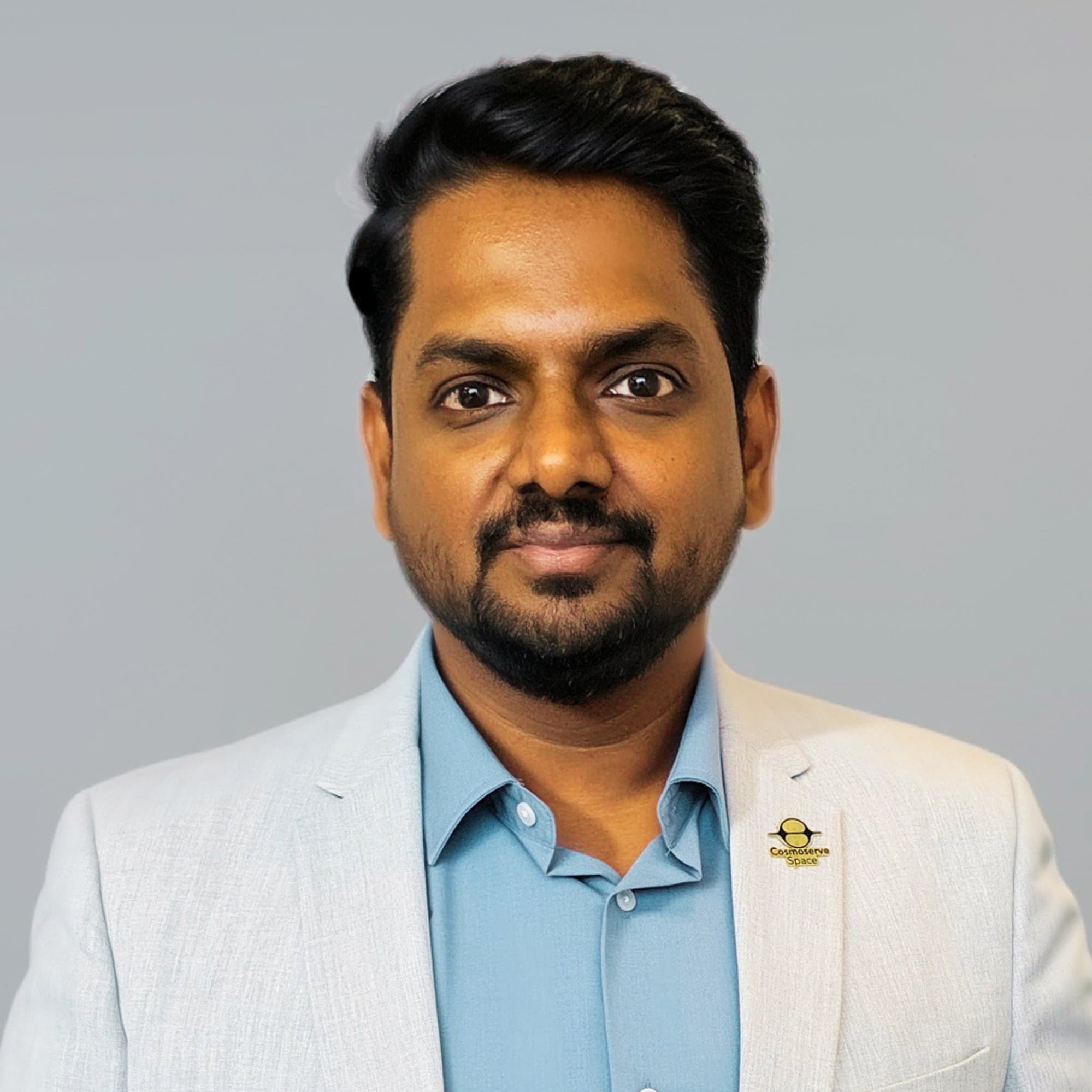
Building the Next Space Economy: Chiranjeevi Phanindra and Cosmoserve's Case for Orbital Maintenance
Chiranjeevi Phanindra, Founder & CEO of Cosmoserve Space, spent 14 years at ISRO working on re-entry and human spaceflight. Today, he is focused on a vital challenge: keeping Earth’s orbit usable.
Read Full Story
Corporate Visionaries
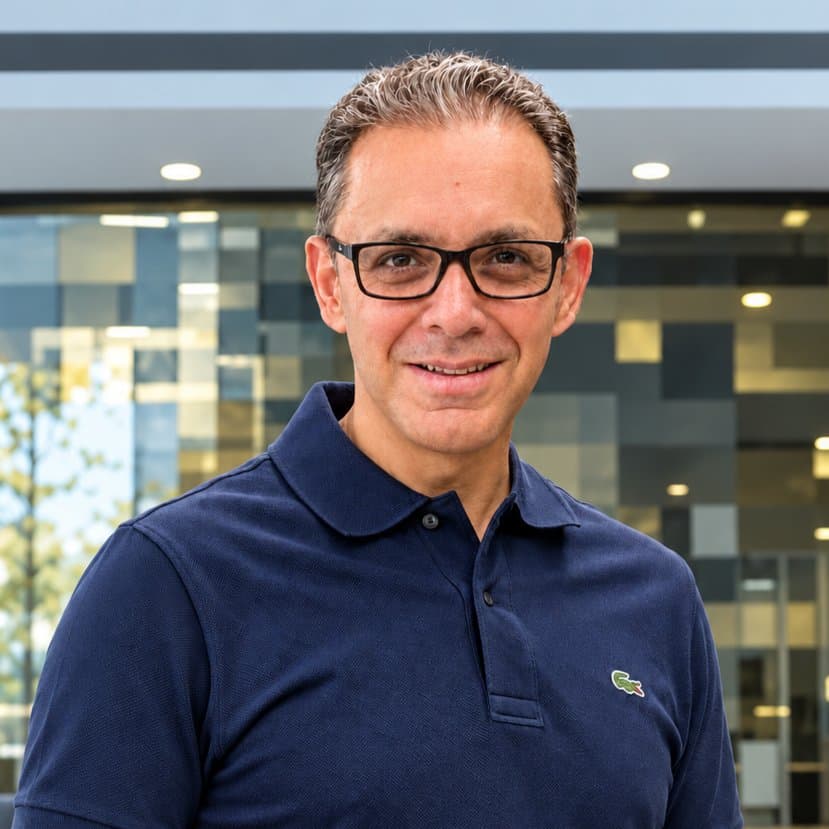
Shashank Sahni on What Success Leaves Out
Shashank Sahni, Google’s Managing Director of Global Ads Solutions, reflects on what customers reveal, what ambitious teams need from their leaders & what the mountains and marathons have taught him about going further.
Read Full Story
Corporate Visionaries
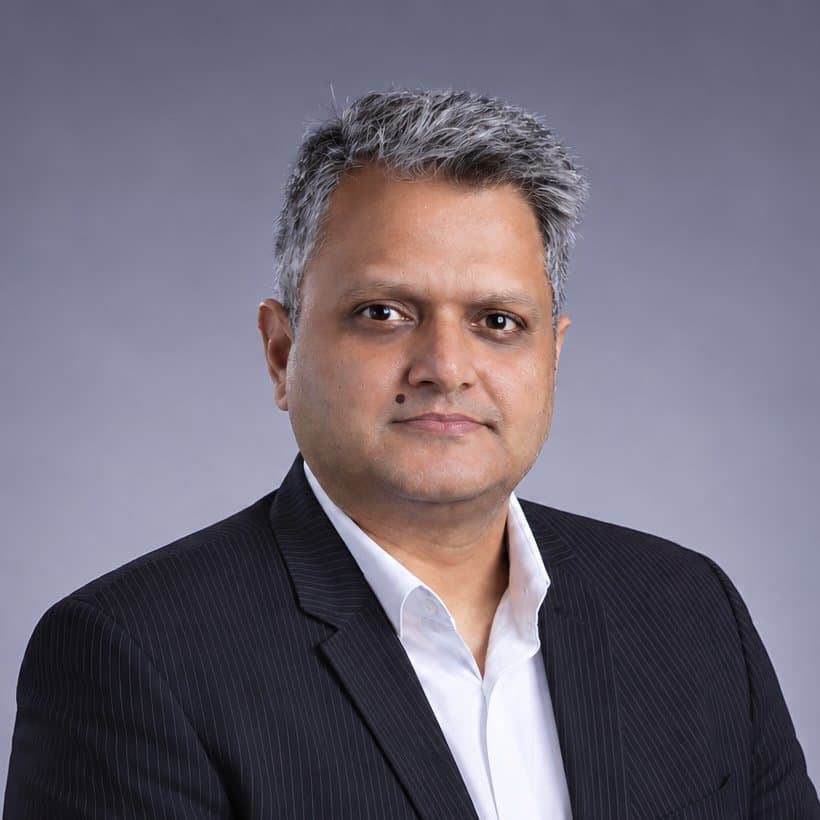
Clinical Multiplication: Divesh Singla on the Healthcare AI Case That Headlines Keep Missing
Divesh Singla, Managing Director, India at Veradigm, brings two decades in healthcare technology to the AI question leaders cannot avoid: how to expand clinical capacity without weakening human judgment.
Read Full Story