Category: Founders & Innovators
Jeevika Tyagi chose purpose over prestige, building Honestly One and aastey on transparency, resilience and radical honesty; proving that authenticity, when deeply embedded, becomes an enduring business advantage.
Building Without Masks: Jeevika Tyagi's Relentless Pursuit of Honesty
IndiSight Editorial
Aug 25, 2025

Jeevika Tyagi
The first time Jeevika Tyagi realized she was done playing safe, she was thousands of miles away from home, in a Manhattan skyscraper, seated around a polished oak table at BlackRock. On paper, she had everything: the security of an elite job, the weight of an international brand behind her name, and a seat at conversations most would fight their whole lives to enter. Yet, as she watched strategies unfold about multiplying other people’s fortunes, an unfamiliar hollowness sank in.
“It wasn’t meaningless,” she recalls. “But it wasn’t my meaning.”
That recognition, part discomfort, part clarity, wasn’t a dramatic walkout moment. It was quieter, the kind of decision that grows inside you until you cannot ignore it. Jeevika did what few in her position dare to do: she walked away from the cushion of privilege to build something of her own.
What she would go on to build is not the kind of glossy startup story that Indian entrepreneurship often sells. No dramatic overnight unicorn status. No headlines celebrating valuations. Her journey, instead, has been a constant negotiation with resistance: supply chains that did not yet understand sustainability, investors who struggled to believe a woman founder’s vision, public ridicule after a Shark Tank episode that did not go her way.
Through all of it, she made one stubborn choice: never to hide behind performance. If the company was running at a loss, she told her customers. If layoffs had to happen, she told her team without sugarcoating. If trolls mocked her on national television, she answered them not with spin but with persistence.
“Honesty isn’t a campaign line for me,” she says. “It’s the structure holding everything up.”
From Storytelling to Structure
Before she was a founder, Jeevika was a storyteller. In Bollywood and advertising, she learned what it takes to make people care, less about slogans and more about resonance. “People don’t carry the campaign with them,” she explains. “They carry how it made them feel.”
That understanding of emotional connection became the backbone of her second venture, Honestly One. Unlike traditional agencies, which she believes parachute in with slide decks, Honestly One was designed to be something closer to an ally. “Startups don’t need vendors,” she says, leaning forward for emphasis. “They need someone willing to fight with them, not just for them.”
It was this conviction, that trust outlasts tactics, that later shaped how she built aastey, India’s first sustainable athleisure brand designed for Indian women. And this time, the stakes were heavier.
The supply chain barely understood what “sustainable” meant. Customers dismissed it as elitist. COVID turned negotiations into WeChat battles with overseas factories. Yet the same skill that once helped her craft blockbuster campaigns now helped her build something deeper: a company people could believe in even when profitability wasn’t immediate.
“We said it openly: yes, we’re losing money right now. Because we refuse to cut corners on sourcing or quality. And the people who stayed with us, they didn’t just buy leggings. They bought belief.”
The Crucible of Transparency
In business, most founders mask fragility with confidence. Jeevika refused. From day one, she treated transparency as non-negotiable. Financials, setbacks, tough calls; everything was put on the table.
“When your foundation is purpose, not profit, you can hold massive weight,” she says.
It is not an easy philosophy. Oversharing can damage operations. Competitors can exploit vulnerabilities. But she insists that measured honesty builds durability. “Customers may forgive a delay. They may forgive a mistake. They don’t forgive being lied to.”
That same approach shaped her leadership style with employees. There were no rehearsed speeches to soften hard news. “Even when we had to cut costs or let people go, we said it as it was. No sugarcoating. No false hope. Trust is earned through consistency, not performance.”
It is a method that resonates strongly with younger employees, especially Gen Z. Raised on authenticity, they resist authority for its own sake but commit fiercely to workplaces where the truth is clear.
Shark Tank and the Test of Fire
If transparency is her creed, Shark Tank India was its trial by fire.
“We went on because we were on the brink. Funding had dried up. We needed oxygen,” she recalls. The show promised exposure, investors, maybe even a lifeline. Instead, edits warped the brand’s story. “The marketing fallout was real and painful. I even asked them not to air the episode.”
What came next was unexpected. Alongside mockery and trolling came an unlikely surge of buyers. “Human behavior defies models,” she laughs. “Sometimes hate fuels sales as much as love.”
The experience forced her to sharpen her own resilience. When her co-founder had to leave the country to manage family emergencies, Jeevika suddenly found herself running what had been a 50-person company largely alone. “Quitting wasn’t an option,” she says.
She pared down operations, recalibrated pricing, and doubled down on community engagement. Instead of hiding, she reclaimed control. “Success isn’t the spotlight. It’s how you wield it. We owned our story, raw and unfiltered.”
The ordeal, she says, left her with a fearless mindset. “Once you’ve been through public ridicule and survived, the noise outside loses its power.”
Discipline Without the Hustle Myth
Running two high-stakes ventures while raising a child is often romanticized as superhuman multitasking. Jeevika treats it as discipline.
“I don’t buy 80- or 100-hour weeks. My six focused hours, strategically planned, yield more than burnout ever could.”
Her days begin early. At 5 a.m. she meditates, not out of trend, but as “structural maintenance.” By six, before her daughter wakes, she has already made the three most important decisions of the day.
This rhythm is her quiet rebellion against Silicon Valley’s hustle mythology. “You cannot lead effectively if you don’t protect your mental and physical capital. Burnout kills companies and founders alike.”
Technology supports her discipline but never replaces it. “AI tools can take care of repetitive work. But trust, creativity, conviction; those are still human. Machines cannot replicate them.”
Vulnerability as Strategy
For many leaders, vulnerability is weakness. Jeevika reframes it as trust-building. She makes a daily practice of writing to ten people: investors, partners, friends, without filters.
“The best investors want the real founder, not a polished mask,” she explains. “Authenticity doesn’t mean sharing everything. It means sharing the right truths with the right people at the right time.”
Her approach resists the performance-driven networking that often defines startup culture. She believes people are drawn to transparency not as a tactic but as proof of alignment.
Gendered Blueprints
Jeevika’s path has not been shaped only by markets or customers. It has been shaped, heavily, by bias.
“The system is designed for male founders with stay-at-home partners. No paid postpartum leave. No infrastructure for maternity. If you don’t adapt the design, you fall through the cracks.”
Skepticism, she says, is often silent but present. “Male VCs may not say it aloud, but the doubt is real. Women have to prove competence before they even get to prove vision.”
Her response has been to shift the conversation from personal struggle to systemic design. “This isn’t about grievance. It’s about waste. Half the talent pool is excluded because the blueprint is wrong. Poor architecture wastes resources.”
Data backs her stance. Companies with women in leadership show stronger retention and performance, yet venture capital continues to skew toward male-led firms. The gap, she argues, is not just inequity but inefficiency.
Looking Ahead: The Post-Authentic Economy
The trends Jeevika anticipates are not abstract. They are visible in boardrooms, supply chains, and consumer expectations.
Millennials and Gen Z leaders demand transparency as a baseline. Regulations are tightening worldwide on supply chain disclosure and sustainability. Climate pressures are forcing companies to re-engineer models once built on endless growth. And as AI automates tasks, the human skills that remain most valuable are the ones Jeevika insists on: authentic relationship-building, cultural intuition, ethical decision-making.
“We’re building the infrastructure for a different kind of economy,” she says. “One where honesty isn’t a luxury but survival.”
Lessons in Raw Leadership
Jeevika’s story resists the easy categories of entrepreneurship. It is not just resilience, not just innovation, not just purpose. It is all of these, fused into a practice of leading without masks.
For founders, she leaves a warning and a guide:
Comfort zones kill growth. Step into discomfort if you want structural integrity.
Transparency is not a weakness. It is weatherproofing.
Every rejection is feedback, not a dead end.
Visibility without control over your own story is wasted work.
For leaders scaling teams:
Protect your mental and physical capital as though the company depends on it. Because it does.
Mistakes are feedback loops, not failures.
Authenticity is not optional; it is the foundation of trust.
Bias in the system is not a personal hurdle; it is a structural flaw that demands redesign.
For investors:
Back founders with deep foundations, not just surface numbers.
Transparency creates measurable competitive advantage in retention, loyalty, and resilience.
Inclusive investing is not philanthropy. It is accessing undervalued opportunities.
The Last Image
When asked what still keeps her anchored through volatility, Jeevika returns to a simple picture: her mornings. A 5 a.m. ritual of silence, a handwritten note to someone she respects, and the discipline to decide what really matters before the noise of the day takes over.
“It’s not glamorous,” she smiles. “But it’s mine. And it keeps me honest.”
In a startup ecosystem where so much is performed, packaged, and spun, Jeevika Tyagi’s insistence on unfiltered truth feels almost radical. Yet, if her journey shows anything, it is that honesty is not just moral, it is structural.
The question her story leaves for every founder and leader is not whether authenticity works. The question is whether they have the courage to build on it, knowing it may be harder in the beginning but stronger for the long haul.
Because in the end, a business built without masks may be the only one that lasts.
Our Suggestions to Read
Discover The Leaders Shaping India's Business Landscape.
Founders & Innovators
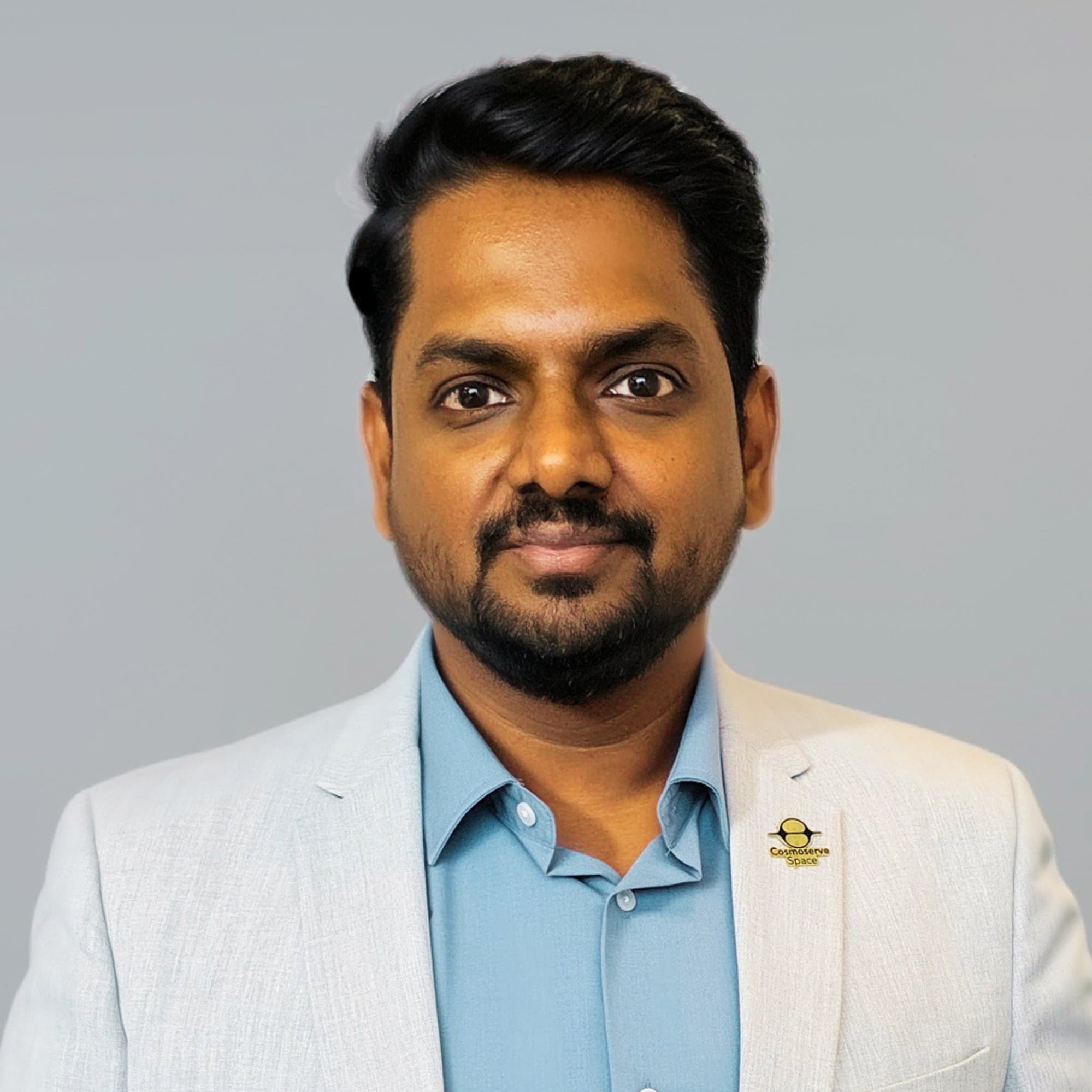
Building the Next Space Economy: Chiranjeevi Phanindra and Cosmoserve's Case for Orbital Maintenance
Chiranjeevi Phanindra, Founder & CEO of Cosmoserve Space, spent 14 years at ISRO working on re-entry and human spaceflight. Today, he is focused on a vital challenge: keeping Earth’s orbit usable.
Read Full Story

Investors & Catalysts
The Physical Economy Was Never Slow: A Conversation with Nikhil Choudhary
Nikhil Choudhary, Managing Partner at Nirman Ventures, on the harder ground of technology, where physical AI, venture discipline and industrial adoption have to meet the realities of machines, workers, capital and trust.
Read Full Story

Founders & Innovators
Sanjay Laul on Building Global Education's Next Chapter
Sanjay Laul, Founder of MSM Unify, a global education and talent-mobility platform, has spent 25+ years helping institutions expand internationally and learners access cross-border opportunities.
Read Full Story