Category: Founders & Innovators
Sankarsh Chanda is redefining what it means to build intelligently. Through Savart and Stardour, he bridges finance and aerospace to explore how systems can think with integrity and adapt with purpose. His philosophy replaces haste with depth, showing that leadership is not about control but coherence, not about chasing outcomes but understanding cause. In his world, intelligence is less about prediction and more about designing the conditions for wisdom to emerge.
Beyond Wealth, Beyond Gravity: Sankarsh Chanda & The Search for Intelligent Order
IndiSight Editorial
Jan 19, 2026

Sankarsh Chanda
Founder · Savart, Stardour
Hyderabad
When Order Becomes the New Ambition
Every era produces a few minds that view the world not as a series of disconnected domains, but as one coherent system of intelligence. Sankarsh Chanda is one of them.
At twenty-six, he leads two ventures that would seem to belong to entirely different universes: Savart, an artificial intelligence driven investment platform that challenges how the world thinks about money, and Stardour Aerospace, a deeptech startup designing propulsion systems capable of moving satellites across orbits. One decodes behavior, the other decodes physics. Yet both are bound by the same operating principle: understanding uncertainty, not escaping it.
For Sankarsh, the real measure of intelligence is not speed or scale, but stability, the ability of a system to maintain integrity while it evolves.
Markets and the universe follow the same logic. Both reward balance and punish arrogance.
That belief, that intelligence when designed well can make even chaos predictable, forms the foundation of his work. His journey offers lessons not only in entrepreneurship but in the art of thinking clearly in an age built on noise.
Treat Every System as a Mirror
Every organization, every market, every decision architecture is a mirror. It reflects what its creator believes about the world.
Sankarsh built Savart not as a company to manage wealth, but as an experiment in understanding human nature. “Money reveals how people think,” he says. “It shows what they fear, what they overvalue, and what they try to hide from themselves.”
At the center of Savart is APART AI, an AI system that studies behavior before balance sheets, decisions before data. It does not just predict the market; it observes the human conditions that drive it, overconfidence, imitation, fear, and impatience.
For him, the stock market is a psychological universe with price as its language. When people overreact, they are not irrational; they are human. What matters is whether the system they inhabit can account for that humanity.
Leaders, he believes, must treat their organizations the same way. “If your team behaves in ways you dislike,” he says, “they are only amplifying what your system encourages.”
The real test of leadership is not whether you fix people, but whether you fix the feedback loops that shape them. Every system is a reflection, and reflection begins with humility.
Discipline Is Design, Not Denial
Sankarsh operates Savart on a deliberately short runway, just one month of working capital. It is not a financial constraint but a philosophical one.
Hunger sharpens logic. When survival depends on reasoning, you start thinking with precision.
Discipline, in his view, is a design principle, not a personality trait. It is how he builds companies, runs experiments, and structures decisions. “Constraints,” he explains, “are what make systems honest. If you remove every boundary, you remove meaning.”
For most leaders, discipline often becomes synonymous with control. For him, it is about preserving coherence. A disciplined organization is not one that obeys orders, but one that functions with clarity even when the leader is absent.
This kind of discipline is silent and structural. It lives in how meetings are framed, how priorities are defined, and how quickly the team recovers from ambiguity.
What this really means is that discipline is not about saying no, it is about knowing what deserves a yes. When applied well, it turns effort into flow and strategy into rhythm.
Build Environments Where Intelligence Can Argue
The smartest teams do not need to agree; they need to engage.
Sankarsh designs organizations where arguments are signs of trust, not rebellion. “If people stop debating,” he says, “it means they have stopped thinking.”
He leads by architecture, not authority. His teams include engineers, physicists, data scientists, and behavioral economists, many older, some far more experienced. Yet hierarchy dissolves in the presence of logic.
In one meeting, when a propulsion test at Stardour got some errors, he responded with calm curiosity. “Now we know where the reasoning broke.” he said.
That response captures his philosophy of leadership. Emotion is information. Failure is data. And trust is built not by comfort, but by shared inquiry.
Great leaders, he believes, are designers of psychological safety, not by being agreeable, but by being consistent. When people know that logic, not hierarchy, determines outcomes, collaboration becomes effortless.
True leadership, then, is not a performance of power but an act of permission, the permission to think freely and argue responsibly.
Design Intelligence That Understands Intention
Artificial intelligence can process more data than any human, yet it often fails to understand intent. That gap between knowing and meaning is what Sankarsh set out to close.
“The goal is not artificial intelligence,” he says. “It is aligned intelligence.”
APART AI does not just predict; it interprets. It asks: why does this investor act this way? What pattern of thought leads to error or success? It learns not only from market data but from the emotions embedded in human behavior.
This principle extends far beyond technology. Whether building a company, designing a policy, or leading a team, every decision system must align with human intention.
Tools amplify what already exists. If your intent is confused, technology will scale your confusion.
In an age obsessed with automation, his approach is a reminder: intelligence must serve meaning, not replace it. True innovation is moral before it is mechanical.
Choose Difficulty as Strategy
In an age where simplicity is idolized, Sankarsh treats complexity as a competitive advantage.
Stardour’s first product, LUCAS, is a hydrogen-oxygen propulsion system, one of the most challenging forms of space propulsion to design. The fuel combination demands cryogenic temperatures below minus 250 degrees Celsius and near-perfect precision in handling.
“Most people avoid hydrogen because it is difficult,” he says. “We chose it because it is difficult.”
For him, difficulty is not deterrence; it is differentiation. The harder the problem, the fewer the contenders.
In business, he applies the same logic. When others chase markets that promise scale, he chases problems that promise depth. Difficulty becomes his moat; it attracts only those who care enough to endure it.
The easy path converges toward sameness. Originality begins where convenience ends.
Leaders often mistake complexity for confusion. Sankarsh sees it as calibration, the act of testing how deeply a system can think before it collapses. Those who design for difficulty end up creating resilience disguised as innovation.
Redefine Risk as Information
When he began trading as a teenager, he did not fear loss. He feared not understanding why it happened. “I did not know losing money was a problem,” he recalls. “I just wanted to know what the market was teaching me.”
That instinct evolved into a lifelong principle: risk is not danger; it is data.
“Failure is research,” he says. “It shows where logic stops making sense.”
In his companies, post-mortems are not rituals of blame but exercises in pattern recognition. Each failure reveals the next hypothesis.
He distinguishes between reversible and irreversible risks. The first category fuels experimentation; the second demands patience.
The only mistake worth avoiding is the one that ends the game.
For leaders, the takeaway is clear: the goal is not to avoid uncertainty but to design systems that learn faster than the environment changes. The best organizations are those that use failure as raw material for intelligence.
Grow by Integrity, Not by Numbers
Savart’s growth philosophy rejects the idea that scale should come at any cost. The company charges transparent, subscription-based fees instead of earning from client churn. “If your revenue depends on transactions,” he says, “your ethics depend on volatility.”
He treats business models as moral declarations. “A company’s economics reveal its ethics,” he often notes.
Growth, in his view, should emerge as a by-product of logic, not ambition.
If a system behaves with integrity, scale follows naturally.
In practice, this means making decisions that preserve reasoning even under pressure. When integrity compounds, growth becomes inevitable.
Leaders who chase valuation often build noise. Those who pursue coherence build institutions.
Governance Is Architecture for Intelligence
Both finance and aerospace are industries where regulation is heavy, failure expensive, and precision non-negotiable. To function in such environments, governance cannot be a compliance checklist; it has to be structural thinking.
Good governance is like good design. You only notice it when it is missing.
He believes every rule should exist to protect a company’s ability to think clearly. “Compliance should not suppress intelligence,” he says. “It should preserve it.”
In this framing, governance becomes an enabler of creativity. It defines the lanes so that the system can accelerate safely.
The lesson for institutions is simple yet profound: systems collapse not from lack of talent, but from erosion of structure. Order is not rigidity; it is the rhythm that allows motion.
Redefine Leadership as Continuity of Thought
Sankarsh does not aspire to be a personality founder. He wants his ideas to outlive him. “If my companies outlive me, that is success,” he says. “If they outthink me, that is legacy.”
This mindset challenges the hero-founder narrative that dominates modern entrepreneurship.
Revenue is a lagging indicator of reasoning. You cannot measure wisdom through quarterly reports.
He views leadership as continuity, the ability of a system to keep improving after the founder steps aside. True influence lies not in being indispensable but in being unnecessary.
For him, legacy is not memory; it is motion. Systems that outlearn their creators are the only proof of intelligent design.
Every leader who builds for continuity, not applause, is already shaping a future that will remember their reasoning, not their name.
Build Systems That Think Beyond Borders
Stardour’s ambition is not limited to India’s orbit. Its long-term goal is to create open-access infrastructure for global science, telescopes and propulsion systems that anyone, anywhere, can use. “Science should belong to humanity, not geography,” he says. “Knowledge must travel faster than privilege.”
That belief translates across his ventures. In finance, he wants to democratize emotional intelligence as much as financial literacy. In space, he wants to democratize exploration itself.
This principle holds a broader truth for leadership: accessibility is the new innovation. The more inclusive the system, the more intelligent it becomes.
Global relevance, in his philosophy, is not achieved by scale, but by service, by making intelligence usable across boundaries of language, wealth, and geography.
Lead Through Questions, Not Conclusions
Sankarsh’s life is built around inquiry. Every company, every idea, begins with a question he does not yet know how to answer.
“When you stop asking questions,” he says, “you stop discovering new forms of order.”
His journey suggests that leadership itself is a form of ongoing research. Certainty, he warns, is the enemy of evolution. The leaders who endure are not those who know more, but those who keep testing what they know.
In every crisis, he returns to the same mental habit: identify the assumption, break it, rebuild from first principles.
He treats reasoning as a muscle, not a moment.
If your thinking does not evolve, your systems will eventually turn against you.
Leaders who design their organizations as living questions rather than static answers build resilience that no market cycle can erode.
Redefine Success as Continuity of Purpose
Sankarsh’s measure of success is long-term and deeply human. He does not celebrate valuation, awards, or even technology milestones. He celebrates coherence, when intention and execution finally align.
“Success is not the outcome,” he says quietly. “It is the continuity of purpose under pressure.”
He often reminds his team that meaning compounds slower than money, but far longer. “Every generation inherits equations they did not start,” he says. “Our job is to keep solving.”
In his world, legacy is unfinished mathematics, and leadership a lifelong apprenticeship in learning how to balance variables you cannot control.
The wisdom here is timeless: great systems do not emerge from brilliance alone. They endure because someone had the patience to build truth one layer at a time.
Leadership Principles from His Philosophy
Conviction is patience under uncertainty. True belief is not noise; it is calm persistence when the data looks incomplete.
Failure is data in disguise. Every setback is a signal waiting for translation.
Design systems that behave ethically. Governance is not about rules; it is about reason.
Respect scales faster than authority. Culture grows where control fades.
Discipline is creative, not punitive. Constraint sharpens innovation.
Entropy is feedback, not failure. Disorder is the teacher every system eventually meets.
Difficulty filters mediocrity. Choose hard problems; they teach better lessons.
Wealth is interpretation. Money is a mirror for what you value most.
Freedom is the ultimate efficiency. Energy flows best where autonomy exists.
Legacy is motion, not memory. The most enduring impact is reasoning that outlives its author.
Closing Reflection: The Search as Structure
The most enduring leaders are those who transform their questions into architectures of learning. Sankarsh Chanda belongs to that rare group who build institutions not to prove themselves, but to test their understanding of how intelligence behaves.
His companies are expressions of one continuous hypothesis, that clarity can be engineered, that purpose can be programmed, and that systems, whether human or mechanical, can be designed to act with grace under pressure.
He knows that proof is temporary and understanding is infinite. “Proof,” he says, “is just evidence that you stopped exploring.”
In a world obsessed with instant validation, he represents a different kind of ambition, one rooted in patience, precision, and a quiet faith that good reasoning eventually reveals good results.
The lesson for every leader, builder, or thinker is simple but profound: progress is not about arriving faster; it is about learning to move with intention.
Savart and Stardour may operate in different skies, but they share a single gravity, a belief that intelligence is the most renewable resource we have.
And in that belief lies a larger invitation: to build systems that outlast attention, ideas that outgrow their authors, and institutions that teach the world not just how to win, but how to understand.
Because for those who keep asking how things truly work, the search itself becomes the structure, and the structure, in time, becomes the proof.
Our Suggestions to Read
Discover The Leaders Shaping India's Business Landscape.

Investors & Catalysts
From Millet to Method: Rasika Prashant on Building What Consumers Return To
Rasika Prashant, CEO of NSRCEL at IIM Bangalore and Co-founder of Soulfull (later aquired by Tata Consumer Products) on consumer trust, category creation, Indian brands, and the founder discipline required after belief.
Read Full Story
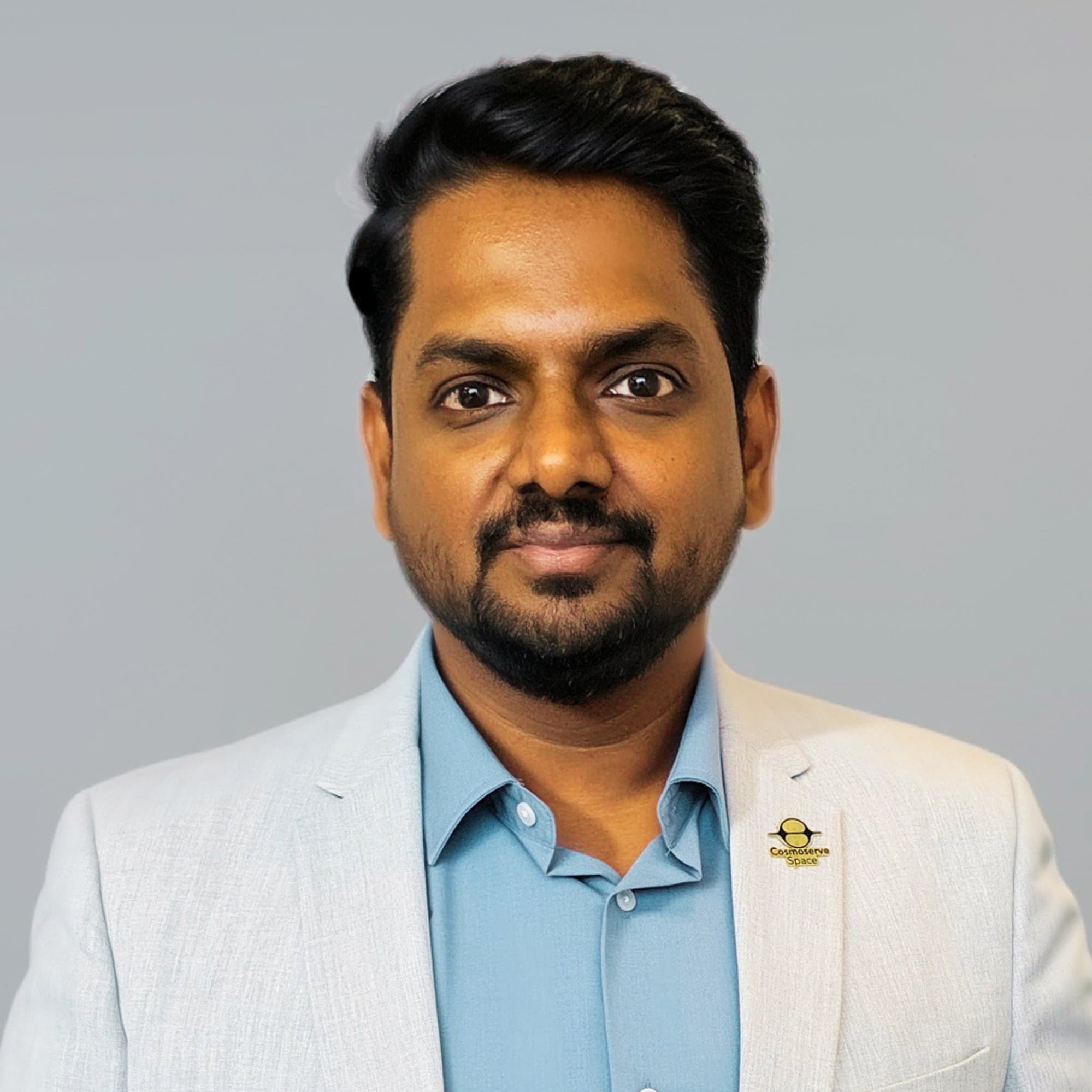
Founders & Innovators
Building the Next Space Economy: Chiranjeevi Phanindra and Cosmoserve's Case for Orbital Maintenance
Chiranjeevi Phanindra, Founder & CEO of Cosmoserve Space, spent 14 years at ISRO working on re-entry and human spaceflight. Today, he is focused on a vital challenge: keeping Earth’s orbit usable.
Read Full Story
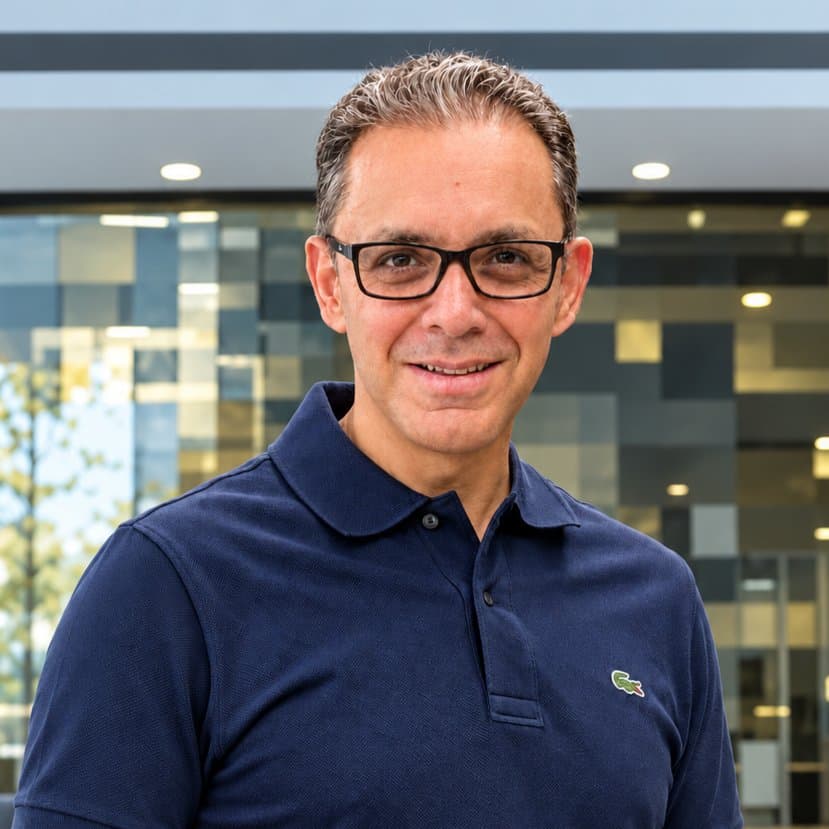
Corporate Visionaries
Shashank Sahni on What Success Leaves Out
Shashank Sahni, Google’s Managing Director of Global Ads Solutions, reflects on what customers reveal, what ambitious teams need from their leaders & what the mountains and marathons have taught him about going further.
Read Full Story