Category: Founders & Innovators
Chandni Jafri builds where no playbook exists. From digital media and angel investing to sustainability, she transforms overlooked opportunities into enduring institutions through vision and disciplined execution.
Architect of the Unwritten: How Chandni Jafri Builds What Others Can’t See Yet
IndiSight Editorial
Aug 17, 2025
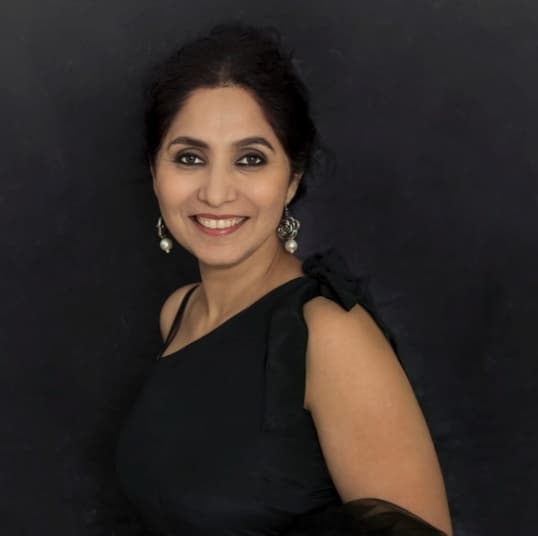
Chandni Jafri,
“I never had a blueprint. But I had something better: instinct sharpened by listening, designing, and showing up before everyone else.”
The Architecture Begins Where the Maps End
In every sector she has touched, including media, investing, sustainability, culture, and coaching, Chandni Jafri has not just led teams or scaled businesses. She has redesigned the scaffolding of entire systems. While others asked what the playbook was, she asked what was missing from the architecture. Her journey is not a progression of roles; it is a curriculum in frontier building.
Long before ESG appeared in investor decks, before angel investing was professionalized in India, and before digital monetization became a business model, Chandni was already at the edge, sensing market undercurrents, designing context-specific systems, and making bold bets where others saw only ambiguity.
“I have always found direction not in what is trending, but in what is being ignored. That is where the most valuable systems begin.”
She does not scale what already works. She builds what does not exist yet and teaches others how to do the same.
Early Roles, Deep Roots: Learning the Language of Systems
Chandni’s early career choices were not part of a five-year plan. They were guided by intuition. She wanted to understand how influence moves, how stories shape institutions, and how power operates beneath the surface.
At Madison World, in the pre-digital media era, she did not just learn media planning. She studied how consumer behavior responded to cultural signals, how language shaped perception, and how advertising was never about noise but about resonance.
“Everyone was chasing airtime. I was listening for emotional velocity.”
Then came TV18 and CNBC, where she helped establish one of India’s earliest business broadcasting networks. Business journalism was not yet mainstream, but she saw the cultural shift happening. Indians were beginning to aspire beyond salaried roles, looking for meaning in equity, ownership, and capital flows.
This led to Moneycontrol.com, a bold early bet on digital financial media. Chandni helped monetize the platform before monetization was even a recognized category. With no data stack, no consumer playbook, and no existing models, she built a commercial engine rooted in credibility and user behavior rather than clickbait.
“People thought digital would kill trust. I knew trust was the only thing that would make digital work.”
At Getty Images, she reframed imagery not as asset management but as strategic brand equity. She led efforts to legalize, localize, and license at scale, helping brands see visuals not as decoration but as legally compliant trust mechanisms in a visual-first economy.
Then at VCCircle, she infused editorial rigor into capital networks, curating founder-investor forums that were not transactional but trust-building. In an era of noisy VC events and superficial pitch decks, she made community the currency.
By the time she became CEO of Mumbai Angels, she was not inheriting a network. She was rebuilding an asset class.
Redefining "Investable": Systems Over Storytelling
When Chandni took over Mumbai Angels, angel investing in India was opaque, relationship-driven, and exclusionary. Most deals happened over dinner tables, and founders outside the metros or outside the typical tech archetype were invisible.
She professionalized the network, launched structured cohorts, introduced founder education, and, most importantly, rewired investor mindsets.
“I was tired of pitch decks being rewarded for storytelling over substance. We had to interrogate metrics. We had to ask whether this founder had depth or just delivery.”
She shifted diligence from charisma to execution and from valuation to vision-fit. Tier-two founders, women-led teams, and cultural ventures suddenly had a seat at the table. Not because of optics, but because of outcomes.
She stayed rooted in integrity, not chasing trends or playing to the crowd, but focusing on what truly mattered. That discipline did not slow her down; it created momentum. By grounding the platform in strong metrics, they not only boosted investor confidence but also broadened participation.
“We brought in investors beyond the typical inner circles. It helped democratize the platform and de-risk the investments.”
From Chaos to Cohesion: Her Decision-Making Playbook
Chandni does not rely on instinct alone. Her decisions follow a rigorously tested, four-part framework built across two decades of uncharted terrain.
1. Context Sensing: What are we missing in the current structure? Who is not in the room? What assumptions are being baked in?
2. Pattern Recognition: Innovation starts where a question gets asked for the first time. I noticed those inflection points early.
3. Bias Interrogation: Are we chasing a vanity metric or solving real friction?
4. Outcome Stretching: Revenue is a milestone, not the mission. Real success is when your system works even in your absence.
This playbook helps her decide what to scale, when to pivot, and when to stay still while others rush.
Sustainability as Strategic Intelligence
At Sound and Light Social Ventures (SLSV), Chandni brought systems thinking to sustainability. She did not lead with guilt or optics. She led with design.
From exploring sunflower meal as an alternative protein to pushing for shark-feeding bans to reframing Kolhapuri chappals as a triple-bottom-line innovation, she built micro-pilots that integrated supply chains, policy, artisans, and impact capital.
“Sustainability is not a moral position. It is operational intelligence. If it is not in your P and L thinking, your model is already outdated.”
She did not just host panels. She orchestrated multi-stakeholder design labs. Bureaucrats sat with artisans. Investors collaborated with policy makers. These were not conferences. They were blueprint sessions for new economies.
“I do not complain about silos. I dissolve them. If the supply chain manager and the artisan cannot speak the same language, the system fails.”
Theatre as Leadership Laboratory
People often skip over her theatre background. That is a mistake.
Chandni spent years in theatre, studying silence, presence, and narrative tension. That training now shows up in boardrooms, coaching sessions, and strategic negotiations.
“Leadership is not articulation. It is presence. It is the ability to hold ambiguity without defaulting to control.”
She does not coach through dashboards. She reads where the energy leaks in a conversation. She listens for what is not being said.
This is why she coined the term emotional due diligence. For family businesses, succession planning, and even investor-founder relationships, financial metrics alone are not enough.
“If there is no alignment of soul, the structure will collapse under its own weight.”
Contrarian Principles That Actually Scale
Chandni’s frameworks often defy convention yet consistently produce outlier outcomes. Her sharpest beliefs include:
Legacy is not transfer; it is reinvention. Most family wealth dies not because of tax but because of emotional fog.
Inclusion is not optics; it is design. If your systems do not accommodate diverse behavior, they are brittle, not elite.
Growth is not success; alignment is. I have walked away from growth deals that felt misaligned. Misaligned growth is a debt, not a win.
Her forecasts are equally provocative.
Most legacy businesses will crumble not because of competition but because they failed to re-architect their inner logic.
Artificial intelligence will not replace leaders, but it will expose those who cannot make sense across disciplines.
The next great leadership advantage will not be speed or scale. It will be narrative agility, the ability to reframe context faster than markets shift.
Global Relevance, Local Integrity
What makes Chandni globally relevant is not geography but philosophy.
She does not mimic Sequoia’s partnership model or Y Combinator’s founder filters. She challenges them.
“Most global models optimize for signal, not substance. But signal is biased. What looks like traction in Silicon Valley may be camouflage in India.”
She designs from the ground up, not from imported frameworks down. And yet, she thinks with a systems fluency that would feel at home in McKinsey war rooms or Davos panels.
Wisdom for the Next Generation
For aspiring founders, young professionals, and seasoned executives, Chandni offers a curriculum few MBAs can match. Her provocations are sharp reminders for anyone building the next decade.
Do not scale confusion. Fix your inner alignment before you hire.
Metrics are not neutral. Ask who this metric benefits and who it ignores.
Rehearse letting go. Your past success might be your biggest bottleneck.
Stay with the ambiguity. The best systems are not built fast. They are built right.
“You do not need clarity to move. You need conviction to hold tension.”
The Final Frame
Chandni does not shout. She does not posture. But her fingerprints are on ecosystems most people now take for granted.
She did not just build companies. She built categories. She did not just follow visions. She translated silence into strategy. And in rooms where noise passed for leadership, she quietly redefined the center by listening to the edge.
She is not just a founder, CEO, coach, or strategist. She is an architect of what has not yet been articulated, and that might be the most radical leadership act of all.
Pull Quote:
“The frontier is not a geography. It is a mindset. And I have built a life out there.”
Our Suggestions to Read
Discover The Leaders Shaping India's Business Landscape.
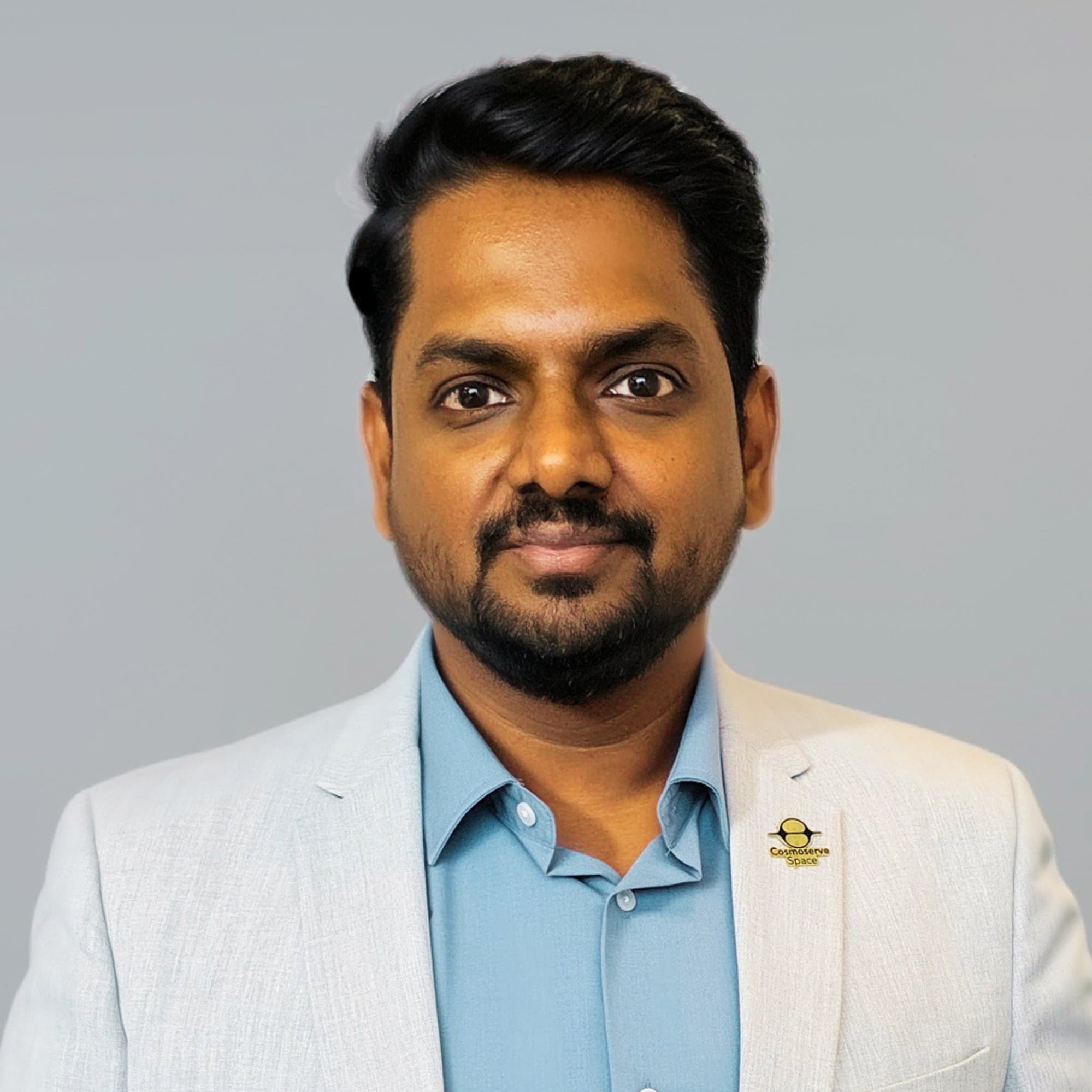
Founders & Innovators
Building the Next Space Economy: Chiranjeevi Phanindra and Cosmoserve's Case for Orbital Maintenance
Chiranjeevi Phanindra, Founder & CEO of Cosmoserve Space, spent 14 years at ISRO working on re-entry and human spaceflight. Today, he is focused on a vital challenge: keeping Earth’s orbit usable.
Read Full Story
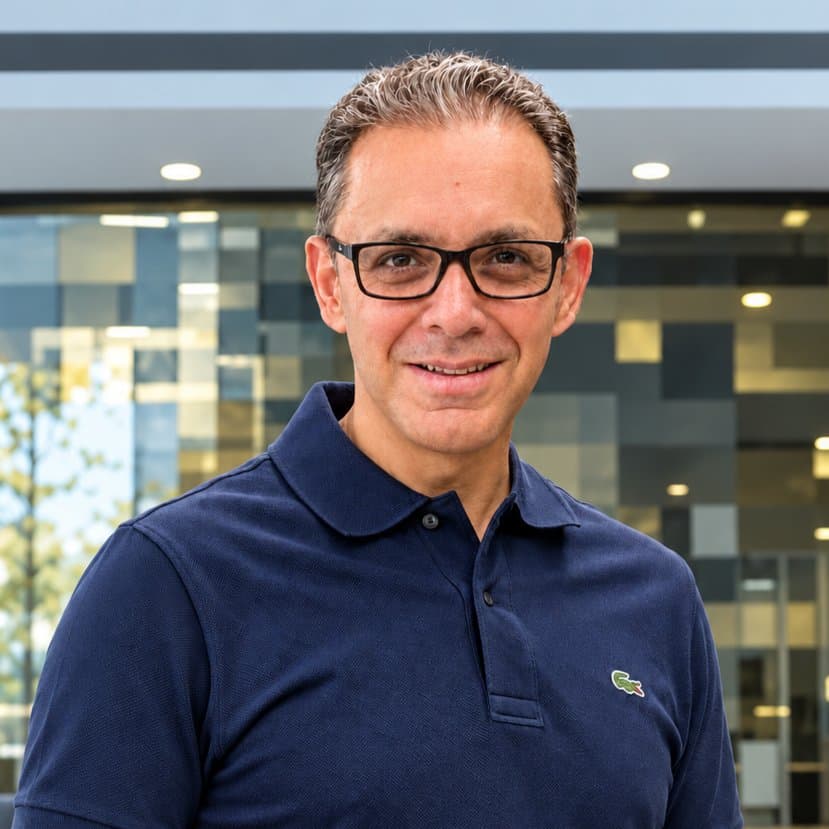
Corporate Visionaries
Shashank Sahni on What Success Leaves Out
Shashank Sahni, Google’s Managing Director of Global Ads Solutions, reflects on what customers reveal, what ambitious teams need from their leaders & what the mountains and marathons have taught him about going further.
Read Full Story
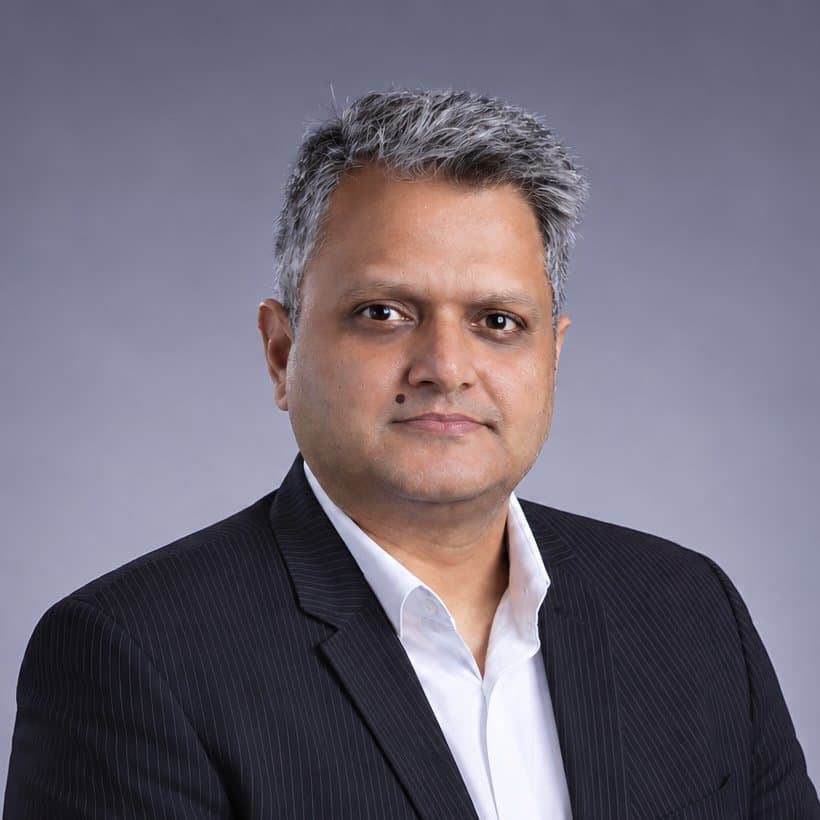
Corporate Visionaries
Clinical Multiplication: Divesh Singla on the Healthcare AI Case That Headlines Keep Missing
Divesh Singla, Managing Director, India at Veradigm, brings two decades in healthcare technology to the AI question leaders cannot avoid: how to expand clinical capacity without weakening human judgment.
Read Full Story