Category: Mentors & Coaches
Twenty-five years of leading teams across Dell, Yahoo, Verizon, Sprinklr, and Entropik taught Dr. Krishna Prasad Nagaraj that leadership is not about racing ahead. It's about knowing when to pause.
The Architecture of Leadership in an Age of AI & Change
IndiSight Editorial
Nov 6, 2025
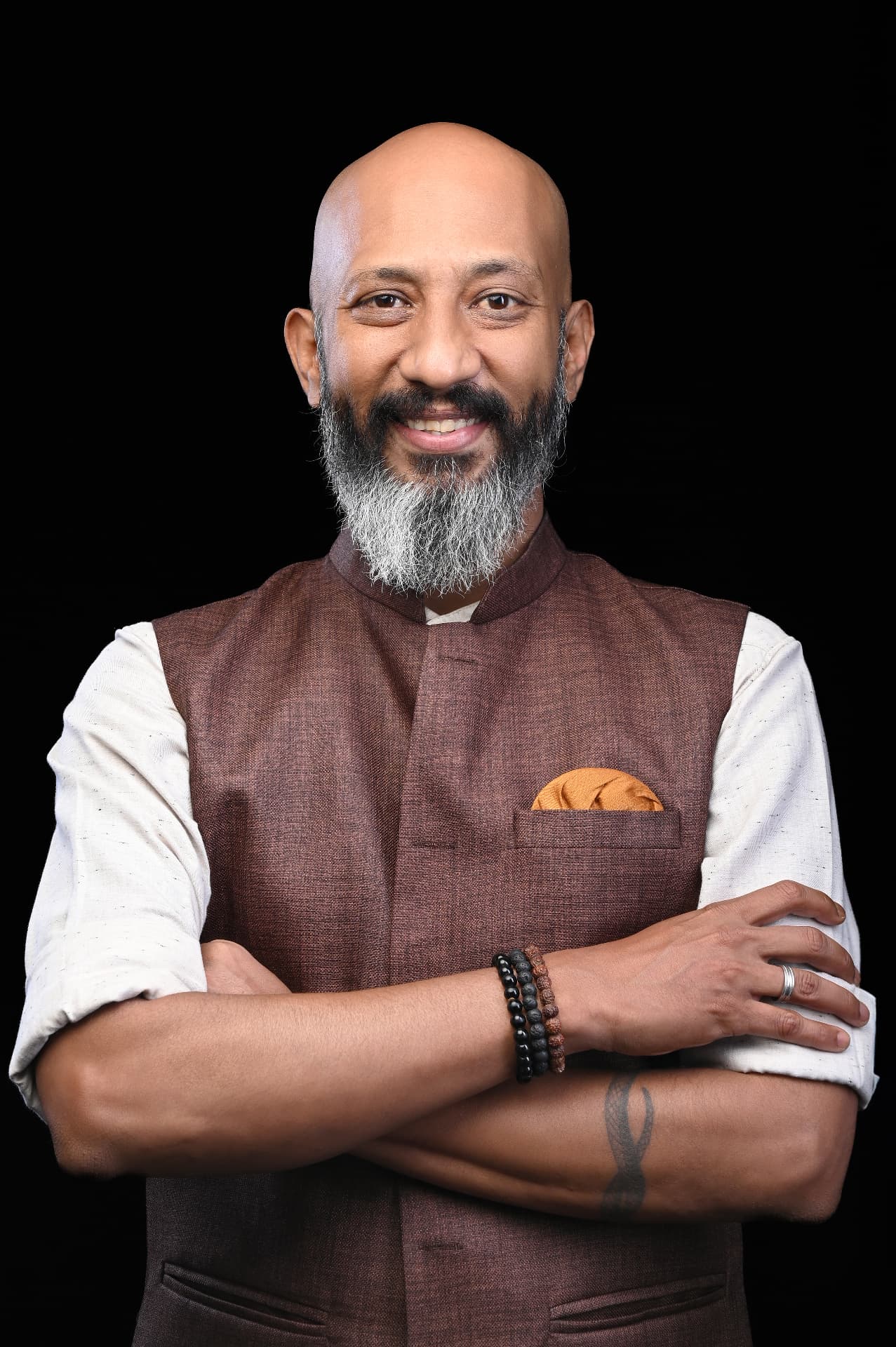
Krishna
Customer Success Leader
The Essence of Leadership
Leadership has always been less about control and more about understanding.
Systems, technology, and tools may change, but people remain at the center of everything. What separates good leaders from great ones is how they respond when things stop going as planned.
For Dr. Krishna Prasad Nagaraj, leadership has been a long journey of discovering how to balance speed with patience, certainty with curiosity, and ambition with empathy. Over twenty-five years of leading teams across companies like Dell, Yahoo, Verizon, Sprinklr, and Entropik, he has learned that no framework or model can replace human sense.
“The best leaders,” he says, “are the ones who stay steady when everything else is shifting.”
In an age where AI can analyze data faster than human thought, Krishna believes the true test of leadership lies in interpretation, not information. “Technology can give you answers,” he says. “But only people can give meaning.”
A Journey That Began with Curiosity
Krishna started as a commerce graduate from St. Joseph’s College of Commerce in Bangalore, who joined RPG Sprint in accounting. But numbers never fully satisfied his curiosity. “I would follow engineers to see how things actually worked,” he says. “That habit changed how I saw my job. It wasn’t about doing tasks. It was about understanding systems.”
That curiosity took him to Dell in 2000, when the company was setting up operations in India. He started in customer support, then moved into quality, workforce management, and supply chain. What shaped him most wasn’t formal training, but the lessons learned on the job.
What he learned early still guides him today. Leadership is not about being the expert. It is about building trust so that others can bring their best to the table. “You don’t have to know everything,” he says. “You have to create an environment where everyone feels safe to know more than you.”
The First Big Lesson
After a decade at Dell, Krishna took a leap and co-founded M9, a cloud storage startup in Singapore. It was ahead of its time. The product used OCR technology to remind users about expiring documents, a simple but powerful idea. Customers came fast, but so did Google Drive.
“We charged for five gigabytes. Google gave fifteen for free,” he says. “That was the end.”
It was his first taste of how fast the world could change and how fragile early success can be. “Speed helps you get noticed,” he says. “But depth keeps you in the game.”
He carried that lesson forward. Move fast when you can fix your mistakes, but slow down when the decision defines who you are. “Leadership is not about racing ahead,” he says. “It’s about knowing when to pause.”
Leading Across Borders
Krishna’s next chapter began at Yahoo. He joined to set up the company’s India operations and later led teams across nine countries. The experience opened his eyes to the power of culture.
“In Boston, being direct builds trust. In Romania, patience does. In India, relationships do,” he explains. “The formula is never the same, but the principle always is. Say what you mean. Do what you say.”
Through these years, Krishna learned that leadership is not about managing people. It is about managing energy. “You can’t lead everyone the same way,” he says. “You have to learn how each team, each culture, and each person builds trust differently.”
When Data Stops Helping
As Krishna moved into the tech and AI world, he found himself surrounded by endless dashboards and reports. “The problem wasn’t a lack of information,” he says. “It was too much of it.”
In those moments, he relied on a simple principle. Go back to the basics. “Ask yourself: what are we really trying to solve? What’s the decision we need to make now?”
For him, the job of a leader is not to find perfect data but to make honest decisions. “When information conflicts, talk to people,” he says. “When spreadsheets argue, listen to humans.”
Clarity, he believes, comes not from numbers but from perspective. “Data tells you what’s happening,” he says. “People tell you why.”
Systems That Can Breathe
Krishna often describes organizations as living systems, not monuments. “Companies that last know how to rebuild,” he says. “The ones that fail try too hard to preserve what no longer works.”
He believes that systems should act like scaffolds, strong enough to hold the work, flexible enough to evolve. Processes, tools, and structures are meant to serve people, not the other way around.
“The moment a system becomes more important than the people running it,” he says, “you’ve already started losing.”
Durability, he adds, is not about perfection. It is about resilience, the ability to learn, repair, and start again.
Rethinking Loyalty
One of Krishna’s most refreshing views is on loyalty. “Loyalty is not permanent,” he says. “It’s a relationship that has to be renewed.”
He shares a story to explain. “I once read that your loyalty to an umbrella ends when it stops raining,” he laughs. “That’s human nature. People change. Circumstances change.”
For him, the job of a leader is not to demand loyalty but to deserve it every single day. “People stay when they feel valued and seen,” he says. “They leave when they feel invisible.”
He reminds leaders to never take loyalty for granted. “Even the best team can drift if you stop investing in trust,” he says. “Loyalty is built in small, everyday gestures, not speeches.”
“True leadership isn’t about retention. It’s about renewal.”
The Courage to Be Real
For years, Krishna believed a leader had to be the strongest person in the room. Time and experience changed that belief. “The myth of the superhero leader is dangerous,” he says. “Trying to be invincible only makes you rigid.”
He learned that vulnerability, handled well, creates connection. “When you admit what you don’t know, you don’t lose authority. You gain honesty.”
He recalls a moment at Yahoo when millions of accounts were compromised. Everyone was told to help. “It sounded inspiring, but chaos followed,” he says. “You can’t ask a fish to climb a tree.”
That crisis taught him a lasting lesson. Real leadership is not about saving the day. It is about keeping the system calm when everyone else is panicking.
Protecting Energy
Burnout, Krishna says, doesn’t arrive suddenly. It builds quietly. “I know I’m burning out when I stop laughing at myself,” he says. “That’s when I know I need a break.”
He treats energy as a form of responsibility. “If I’m tired, I drain my team,” he explains. “If I stay balanced, I lift them.”
His recovery rituals are simple: motorcycle rides through the hills, long conversations with old friends, and time in silence. “Leadership is rhythm,” he says. “You can sprint for a while, but you have to breathe too.”
The Generational Change
Working with younger teams has given Krishna new insights about motivation. “My generation was taught to fix things when they broke. The younger generation is taught to move on,” he says.
He doesn’t see it as disloyalty but as a shift in values. “They aren’t afraid to start again,” he says. “And maybe that’s something we can all learn from.”
He believes leaders must redesign the workplace for this mindset, with shorter projects, faster learning, and visible growth. “If people can see progress, they stay engaged. If they don’t, they leave, and that’s okay.”
What matters, he says, is honesty. “We don’t own people. We grow with them.”
Krishna expands on this philosophy in his book The Leadership Feed: Developing Leadership Skills for Gen Z. It challenges the idea that leadership is a rare superpower. Instead, it argues that leadership is a skill anyone can build with the right mindset, self-awareness, and daily practice. “The world doesn’t need superheroes,” he writes. “It needs self-aware humans who can adapt fast and lead with empathy.”
What We Choose to Measure
Most companies, Krishna believes, measure activity instead of impact. “We love counting what’s easy to count,” he says. “But real performance is about what changes decisions.”
He uses a simple test:
If a metric disappeared and nothing changed, stop tracking it.
If it doesn’t affect value, cost, or risk, it’s decoration.
If reporting it takes longer than fixing the issue, it's a waste.
“The purpose of measurement,” he says, “is to guide choices, not to prove effort.”
He adds, “Performance measurement feeds data for talent decisions, but it does not and cannot inherently improve performance. It’s like taking your temperature when you have a fever. It doesn’t actually cure the fever; it just tells you about it.”
The Right Pace
For Krishna, timing is the silent skill behind all great leadership. “Knowing when to move is everything,” he says.
He calls it the “speed test.” Move fast when the risk is low and the learning high. Slow down when mistakes are expensive or irreversible. “The same company should sprint on product launches but walk carefully on culture,” he says.
The principle is simple. Speed without reflection is chaos. Reflection without action is stagnation.
Finding Balance Within
Despite his years in technology and global management, Krishna speaks most comfortably about balance and stillness. He finds his metaphors not in boardrooms but on the road.
He still rides a 27-year-old Yamaha RX. “It’s imperfect, noisy, and beautiful,” he says. “Every part matters. If one fails, the whole machine shakes. That’s how teams work too.”
He believes leadership begins with inner order. “You can’t steady others if you’re not steady yourself,” he says. “The system outside will always be unpredictable. You build calm inside.”
His daily rituals include reflection, journaling, and humor. “If I can’t laugh at myself,” he says, “I’m taking life too seriously to lead.”
What Time Has Taught Him
After twenty-five years of leading teams, building companies, and mentoring founders, Krishna’s ideas about leadership have become simple and strong.
Measure less. Listen more.
Move fast when mistakes can be fixed. Slow down when they can’t.
Systems should serve people, not the other way around.
Trust takes consistency.
Loyalty must be earned again and again.
Data guides decisions, but people give them meaning.
Curiosity creates ideas. Discipline brings them to life.
Vulnerability is strength with honesty.
Energy is your first responsibility as a leader.
The best leadership begins with leading yourself well.
A Final Reflection
When asked what keeps him centered, Krishna pauses. “It’s simple,” he says. “The race is never with others. It’s with yourself.”
Leadership, in his eyes, is not a position but a practice, the daily act of showing up with clarity, empathy, and courage.
“The only question that matters,” he says, “is whether you are better than you were last year.”
That quiet question, repeated enough times, builds not just better leaders but better systems and better people.
Our Suggestions to Read
Discover The Leaders Shaping India's Business Landscape.
Corporate Visionaries
The Work Before the Story: Rahul Malhotra on Trust, Behaviour and the Business of Marketing
Rahul Malhotra brings 30+ years at P&G and Shell across global CEO and marketing roles, offering deep insight into business, consumer behaviour, organisational change, commercial judgement and reputation.
Read Full Story
Education Leadership
Dr. Chandrasekhar Sripada on Building Human Capital for a Future-Ready India
A global HR leader across SAIL, NIIT, Reliance, Capgemini, IBM and Dr. Reddy’s, and now an academic at ISB, Dr. Chandrasekhar Sripada brings a rare view of how institutions build trust, participation, and capability.
Read Full Story

Education Leadership
The Founder the World Has Been Waiting For: Dr Noa Gafni on AI, Access and the New Entrepreneurial Moment
Dr Noa Gafni, Professor & Academic Director (Entrepreneurship) at New York University, explains why AI-era founders need more than speed: judgment, trust, community, and the discipline to solve real human problems.
Read Full Story