Category: Investors & Catalysts
Dhiraj Kumar Sinha blends a lawyer’s precision with an operator’s intuition, backing founders not with spreadsheets but with belief, dialogue, and disciplined entry. His philosophy reframes angel investing as 30% capital and 70% presence scaffolding built to support resilience, resolve ego clashes, and guide founders through ambiguity. By entering low, exiting high, and keeping trust at the center, he proves that in early-stage ventures, conversations compound faster than capital.
Lower Entry, Higher Exit: The Architecture of Angel Capital According to Dhiraj Kumar Sinha
IndiSight Editorial
Sep 8, 2025
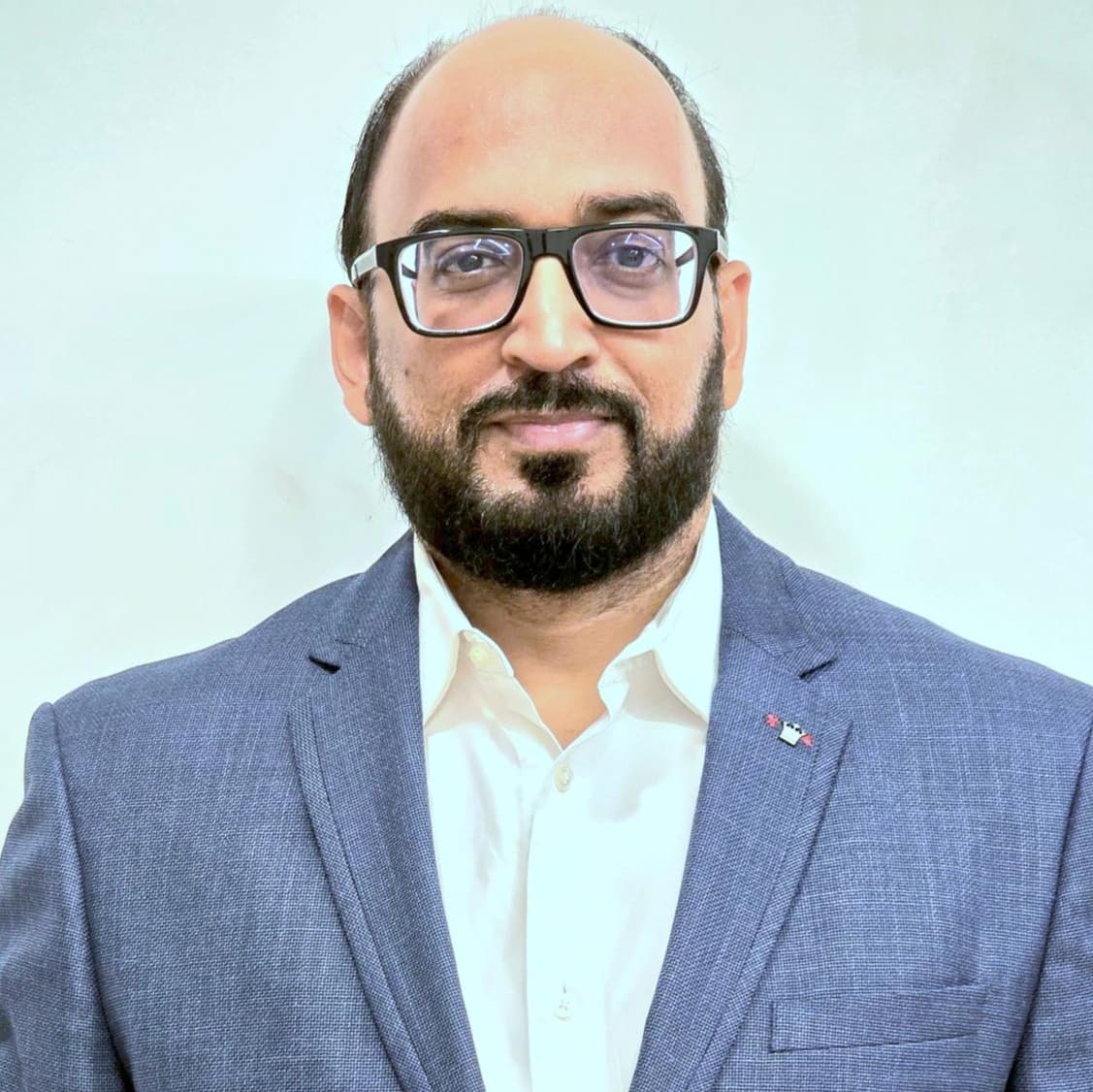
Dhiraj Kumar Sinha
Co-founder & Managing Partner · SilverX Fund
Hyderabad
The best angel investors are not gamblers of capital. They are architects of failure. They know half their bets will collapse, that headlines will outshine fundamentals, that egos will fracture companies. And still, they step in first.
Dhiraj Kumar Sinha has built his philosophy on this contradiction. A lawyer who became a venture capitalist, and an operator who became a mentor to founders, he carries both the sharpness of legal contracts and the patience of a farmer planting seeds. His framework is disarmingly simple: enter at the lowest possible cost, exit at the highest possible value. But behind that arithmetic lies a worldview about risk, resilience, and the future of entrepreneurship in India and beyond.
“The entire angel model is built on failure,” Dhiraj says. “But the failure of a company is not the failure of trust. The real collapse is when people stop believing in each other.”
This is not the language of spreadsheets. It is the architecture of belief.
From Law to Capital
Dhiraj’s early professional life was rooted in corporate law. Unlike many lawyers who stayed behind the desk, he embedded himself in operations. In aviation, he sat in cockpits and studied engines. In renewable energy, he walked the fields where solar panels met land disputes. In real estate, he watched projects stall under the weight of compliance.
That operational instinct shaped his shift into investing. While his legal training taught him to see risk, his time inside businesses taught him to spot opportunity.
“The law degree helps you understand the risk,” he says. “But if all you see is risk, you will never invest. I always looked for operational potential: new markets, new products, new jurisdictions.”
It was not a polished boardroom pitch that pulled Dhiraj into angel investing. It was something far more ordinary and yet transformative: a morning walk.
In Hyderabad, he found himself among a group of senior professionals from Microsoft, Amazon, HSBC, Qualcomm, and other global firms. Each morning, as the city was still waking, conversations on those long walks drifted from corporate routines to restlessness, from safe salaries to unspent ambition. They had capital. They had expertise. What they lacked was purpose.
A failed early investment exposed the gaps in India’s angel ecosystem. These were early days of angel investing around 2014 and 2015, when there was no reporting, no structured follow-up, and no accountability once the cheque was written. Dhiraj and his peers decided they could do better. What began as forty walkers soon became a network of more than 160 members spread across India, the Middle East, Europe, and the United States. Out of that experiment grew one of India’s earliest pre-seed funds, a SEBI-registered Category I AIF launched in 2020.
By then Dhiraj had already backed dozens of startups. Today, with more than 80 investments behind him and a new large fund in formation, he sees those walks not as casual exercise but as the unlikely crucible where a philosophy was born: early capital should be as disciplined as it is daring.
The First Believers
At the earliest stages, no spreadsheets matter. Revenue projections are speculative. Markets shift within months. Products evolve before customers arrive.
“At seed stage, you are backing the founder,” Dhiraj explains. “Markets change, products evolve, but conviction is the constant. The question is always: can this person endure?”
Across thousands of pitches and a thousand founders, he has developed a lens for human signals. It is not the polish of a pitch deck. It is whether a founder knows their product deeply, whether they accept gaps without deflection, whether resilience appears in small, unguarded moments.
He has turned down companies with enormous vision but oversized egos.
“Big dreamers we can maneuver. Big egos we cannot,” he says. “If a founder thinks they know everything, they will not survive ten years with investors, employees, and markets.”
The paradox is that angel investing demands both faith and confrontation. Dhiraj is comfortable with both. In one portfolio company, two founders nearly destroyed their business in a fight over ego. He sat with them, issued what he describes as a “tough, almost threatening” talk, and forced resolution. The company survived and grew multifold. In another, he reconciled founders along with their own parents to secure the signing of a term sheet.
These interventions reveal a truth rarely discussed: early investors often act as therapists, referees, and crisis managers. Capital is only 30 percent of the role. The remaining 70 percent is presence.
The Friend of Founders
What Dhiraj wants to be remembered for is not the size of exits or the multiples of return.
“I want to be remembered as a true friend of the founders,” he says. “Whether I do a deal with them or not, I respect them. They have the courage to do what I never did at their age.”
That philosophy shapes how he views dilution, irrelevance, and handover to later-stage funds. While many angels lament losing rights or seeing their stake shrink, Dhiraj treats early investing as a relay.
“Our role is to bring the founder to a level where institutional investors can take over. After that, you step back. Your relevance comes not from rights, but from the systems you helped put in place.”
In his telling, angels are scaffolding. They support until the structure can stand on its own.
The Architecture of Entry and Exit
The framework at the heart of Dhiraj’s philosophy is brutally simple.
“The math is clear,” he says. “Low entry cost, high exit value. Call it power law, call it IRR. The essence is the same.”
Yet he is quick to note that this is not about exploiting founders in smaller cities. It is about arbitrage. Startups in Bhubaneswar or Patna can operate at 30 to 40 percent lower overhead than those in Bangalore or Mumbai. Rent, salaries, and burn are all lower. The same quality of talent emerges from IITs and IIMs, but the cost base is leaner. If the product is comparable, the return profile is stronger.
Critics call it favoritism or charity when investors back companies in Tier-2 and Tier-3 cities. Dhiraj reframes it as smart venture math.
“Risk is not higher in Bhubaneswar than in Bangalore,” he insists. “But entry is cheaper, and exit can be larger. That is not charity. That is arbitrage.”
This lens is not limited to India. Globally, similar arbitrages exist. Lagos competes with Nairobi. Medellín competes with São Paulo. Vietnam offers lower cost bases than Singapore. In each case, founders pay a price for authenticity, for refusing to migrate to global hubs. Investors who understand the arbitrage stand to capture both financial return and systemic impact.
Dialogue as Bridge
Perhaps the most distinctive philosophy Dhiraj brings is his belief in dialogue. From his legal career to his investing life, he has carried a single rule.
“Keep the conversation going,” he says. “The moment you stop talking, confusion and misinterpretation take over.”
He applies this rule to negotiations, to founder disputes, and even to personal life. “When my wife is angry, I keep talking until she calms down,” he laughs. The point is serious. Dialogue, in his view, is the bridge between fear and wisdom. Contracts protect. Conversations create.
This principle extends beyond venture. In corporate leadership, silence often escalates conflict. In geopolitics, lack of dialogue breeds mistrust. In organizations, disengagement erodes culture faster than any policy. Dhiraj’s lesson is deceptively simple but globally universal: keep talking.
Reconciling Power Law and Human Belief
Venture capital is governed by the power law: 20 percent of investments return the fund, the rest fade. Yet Dhiraj insists this statistical truth cannot overshadow the human side.
“Power law is just a model,” he says. “It convinces LPs that returns are possible. But without relationships, without integrity, no model works.”
The tension between cold mathematics and warm belief is the essence of his practice. He accepts that most companies will fail, but insists every founder deserves respect. He acknowledges that exits matter, but believes that mentorship compounds faster than capital.
This reconciliation is not sentimental. It is strategic. Founders talk to each other. Reputation compounds. In ecosystems still forming, the credibility of an investor is often worth more than the check size.
Global Lens on Governance
Dhiraj is unsparing in his critique of governance failures. He has seen how weak oversight allows forged reports, unchecked related-party transactions, and manipulated disclosures to slip past investors, boards, and auditors.
“Oversight often comes too late,” he warns. “Boards are present in form, but absent in function.”
He argues that this is not unique to India. Global markets have their own failures, from celebrated unicorns that collapsed under the weight of hidden liabilities to listed giants that fell when compliance was treated as a formality. In each case, investors celebrated momentum and overlooked morality. The lesson is universal: compliance on paper is not governance in practice.
Here, his legal background and operational instincts intersect. He calls for due diligence that goes beyond financials into culture, psychology, and interpersonal dynamics.
“Business plans on Excel are works of art,” he says. “The real due diligence is whether people can handle pressure without breaking integrity.”
The Brutal Truths
As a mentor, Dhiraj does not believe in shielding founders from hard feedback. He recalls telling two battling co-founders that if their egos destroyed the company, investors would come after them legally. The threat shocked them into reconciliation.
He has also told founders that their valuations are unjustified, their funding requests excessive, or their models unsustainable. In one case, he walked away from a company now worth over 100 million dollars because the founders played valuation shopping. He does not regret the principle, even if he regrets the missed return.
Such brutal truths, he argues, save more companies than polite encouragement.
Investing Beyond Metros
Perhaps Dhiraj’s most distinctive contribution is his insistence on mentoring and investing in overlooked geographies. From Bihar to Odisha to smaller towns in Telangana, he spends time with founders who would otherwise be dismissed as “unfundable.”
The challenge is not competence but perception. Founders from smaller cities often face skepticism in metros. Investors equate location with maturity. Charisma often trumps authenticity.
“Eighty percent of unicorn founders in Bangalore or Mumbai actually come from small towns,” he notes. “They only become fundable once they migrate. That bias must change.”
Global parallels are evident. In the United States, Midwest founders struggle against Silicon Valley dominance. In Europe, Berlin overshadows Eastern hubs. In Africa, Nairobi and Cape Town dominate investor attention. Yet innovation often emerges at the margins. Investors who recognize this pattern capture both return and transformation.
Looking Ahead
For Dhiraj, the next decade of Indian ventures will be defined by reverse flipping, deeper domestic LP participation, and a surge of tech IPOs in Indian markets. He believes regulatory frameworks must become faster and simpler.
“It should not take 90 days to close a seed round,” he says. “That is a criminal waste of time.”
Globally, he sees venture capital moving toward hybrid models like General Catalyst’s “venture buyout” approach, acquiring companies and layering technology for transformation. He believes India will adapt similar models, combining venture speed with private-equity discipline.
But his personal ambition is less about funds and more about philosophy.
“VC is a 25-year journey,” he says. “I am only in year nine. My hope is to be remembered as a true friend of the founders.”
Leadership Lessons
Enter low, exit high: Discipline in entry valuation defines long-term return.
Dialogue outlasts contracts: Keep conversations alive; silence is where trust collapses.
Respect over ego: Founders with vision can be guided; founders with ego destroy value.
Arbitrage of geography: Smaller cities and overlooked markets offer better cost structures and higher exit potential.
Governance is practice, not paper: Tick-box compliance hides the very risks it claims to monitor.
Failure is structural, not personal: Most companies will fail, but respect for founders must not.
Capital is 30 percent, presence is 70 percent: Angel investing is more about mentoring than money.
Reputation compounds faster than returns: Founders talk; credibility builds future deal flow.
Confront with brutal truths: Saving a company often requires hard feedback, not polite encouragement.
Friendship is strategy: Being remembered as a friend of founders creates trust that attracts the next generation.
Closing Reflection
The architecture of angel capital is not built on spreadsheets. It is built on people who believe before others do, who absorb failure without resentment, who speak truths founders may not want to hear, and who step back once institutions step in.
As Dhiraj puts it:
“Capital compounds. Trust compounds faster. The investors who understand that will define the next chapter of ventures.”
That principle is not just Indian. It is universal. And it is what separates the architects of belief from the gamblers of chance.
Our Suggestions to Read
Discover The Leaders Shaping India's Business Landscape.
Investors & Catalysts
The Physical Economy Was Never Slow: A Conversation with Nikhil Choudhary
Nikhil Choudhary, Managing Partner at Nirman Ventures, on the harder ground of technology, where physical AI, venture discipline and industrial adoption have to meet the realities of machines, workers, capital and trust.
Read Full Story
Founders & Innovators
Sanjay Laul on Building Global Education's Next Chapter
Sanjay Laul, Founder of MSM Unify, a global education and talent-mobility platform, has spent 25+ years helping institutions expand internationally and learners access cross-border opportunities.
Read Full Story

Investors & Catalysts
The Truth Ladder: Shuchi Pandya on What Consumer Brands Must Prove Before They Earn Belief
After building Pipa.Bella, later acquired by Nykaa, Shuchi Pandya brings an operator’s discipline to Fireside Ventures, asking what a young consumer brand must prove before it earns the right to scale.
Read Full Story