Young VoiceSociety
Society
The Skills We Lose When Everything Comes to Our Doorstep
Ridhika Thool · GEMS Millennium School, Kalyan, Kalyan, Maharashtra, India
GEMS Millennium School, Vikhroli, Mumbai, Maharashtra, India
17 Nov 2026 / 6 min read
Today, I was hanging out with my friends, and as usual, our conversation somehow turned towards school. With examinations approaching, we started discussing how difficult it was to concentrate on our studies. We all agreed that studying for long hours could get tiring, and we wished we had something different to look forward to during the school day.
During our conversation, one of my friends came up with an interesting idea. He asked, "What if we had a sleeping period at school?"
I immediately disagreed and said, "No! What if we had an Adventure Period instead?"
The moment I said this, our imagination took over. We started picturing ourselves in a classroom where a Mathematics lesson was going on. Everyone looked bored, the teacher was busy explaining problems on the board, and students were eagerly waiting for the bell to ring. My friend and I looked at each other with excitement because we knew the next period was going to be our favourite: the Adventure Period!
Now, what exactly would happen during this period?
In our imaginary school timetable, the Adventure Period would be a time when we could step outside the classroom and explore the world around us. We would have opportunities to learn through experience, discover new things, and try activities that we might never have thought of doing during a regular school day. Sometimes, we could explore nature, visit interesting places, or observe how things work around us. On other days, we could take on small challenges, experiment with ideas, or learn something useful through play.
We imagined that this period would combine Science with several other subjects. For example, we could learn about plants, trees, animals, birds, and the environment by observing them in their natural surroundings. We could even investigate questions that come to our minds. Why do some plants grow better in sunlight while others prefer shade? Why do certain birds visit our school garden? Instead of simply reading the answers, we could observe, experiment, and discover them ourselves.
We could also learn about everyday life and the things we usually take for granted. Imagine learning Mathematics while measuring objects, calculating distances, or preparing a recipe. We could have cooking sessions where we learn to prepare simple dishes, understand measurements, explore ingredients, and develop healthy eating habits. We might even be given a challenge to prepare a healthy snack within a particular budget. That would make us think about nutrition, Mathematics, and money at the same time. After all, cooking is an important life skill that everyone should know!
Sports could also be an important part of the Adventure Period. We could play football, basketball, cricket, badminton, kho-kho, kabaddi, and many other games. Students would have opportunities to discover different sports, develop their physical abilities, and understand the importance of teamwork. We could even organise small tournaments where students take responsibility for forming teams, deciding on rules, and managing the games themselves. Not everyone enjoys the same sport, so there should always be something new to explore.
Apart from sports and outdoor activities, we could include music, painting, drawing, dancing, and reading. We could sit under a tree and read our favourite books, paint pictures inspired by nature, or create stories based on what we observe around us. Students who enjoy performing could participate in dance, drama, or storytelling, while those who prefer quieter activities could spend time reading, writing, or working on creative projects.
The best part would be that we would not have to restrict ourselves to just one subject or activity. Every Adventure Period could bring a different experience. One week, we might explore the environment, and the next, we could solve a challenge, learn a practical skill, or discover a new interest. We could even suggest activities ourselves, giving students a chance to help decide what they want to explore.
We also thought about how this period could help students become more confident and independent. When we work together on a task, we have to listen to different ideas, make decisions, divide responsibilities, and sometimes deal with disagreements. Imagine being asked to design a small garden for the school. We would need to choose plants, measure the available space, understand what they need to grow, and work together to create something useful. Such experiences could teach us lessons that we would remember long after the activity was over.
Another interesting thing about this period would be that there would be less pressure. We would not have to worry about completing notes, memorising answers, or preparing for a test. We could learn by trying things ourselves, asking questions, and sometimes making mistakes. We might discover that something we thought would work actually doesn't, and then figure out another way to do it. I think that would make learning much more interesting because we would be curious about what happens next.
As we continued imagining all these activities, we realised that the Adventure Period would also give students a chance to relax and refresh their minds. After spending hours concentrating on lessons, doing something different could help us return to our regular classes with more energy and enthusiasm. And who knows? A student who finds a particular subject difficult in the classroom might discover that they enjoy learning about it through practical activities.
We were so excited about our idea that we decided to share it with our other friends and teachers. When I shared the concept with one of my teachers, she responded by saying, "If Japan has a sleeping period, we would definitely have a period called 'Adventure'!"
That made us laugh, but it also made us think about how wonderful it would be if schools actually introduced something like this. Perhaps teachers could help students plan activities, and different groups could take turns choosing challenges. Even one Adventure Period every week could give us something exciting to look forward to.
Just when we were getting carried away with our imagination, my friend suddenly brought us back to reality. He said, "Let us go home. We have to study. We can just pray."
And that was it! Our imaginary Adventure Period came to an end, and we returned to our books to continue preparing for our upcoming examinations.
However, the idea stayed with us.
What if schools actually introduced an Adventure Period? It could be once a week or even once a fortnight. It would give students opportunities to explore their interests, learn practical skills, and enjoy education beyond the four walls of a classroom. I think students would also become more involved in learning if they were given opportunities to suggest ideas and explore questions that genuinely interest them.
After all, school is about much more than examinations, marks, and textbooks. It is also where we discover our interests, understand the world, make friends, and learn things that will help us throughout our lives. Perhaps, one day, when students look at their timetables, they will be just as excited about their Adventure Period as we were while imagining ours!
Until then, we have our examinations to worry about. And maybe, just maybe, we can pray for an Adventure Period in our next timetable!
About the Author
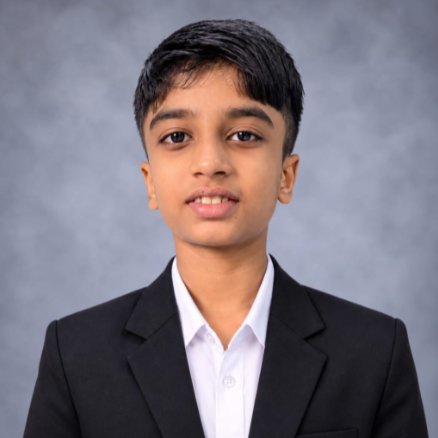
Shrvil Mohite, a Class VI student at GEMS Millennium School, Vikhroli, Mumbai, shares his imaginative vision of an Adventure Period, where curiosity, practical experiences, and student-led exploration make learning more engaging.

Shrvil Mohite
Student writer · GEMS Millennium School, Vikhroli, Mumbai, Maharashtra, India
Society
Ridhika Thool · GEMS Millennium School, Kalyan, Kalyan, Maharashtra, India
Technology
Nysha Shevale · GEMS Millennium School, Vikhroli, Mumbai, Maharashtra, India
Markets
Eva Khan · GEMS Millennium School, Vikhroli, Mumbai, Maharashtra, India